


Introduction
Rare earth magnets, particularly those based on neodymium (NdFeB), are indispensable in modern engineering. Their unmatched energy density allows designers to build smaller, more efficient, and more responsive systems. The demand for small rare earth magnets, strong earth magnets, and neodymium rare earth magnets has surged across nearly all technology sectors.
This article provides a technical, engineering-focused overview of the materials, properties, and wide application landscape of these advanced magnets.
Understanding Small Rare Earth Magnets
Small rare earth magnets are compact high-performance magnetic components fabricated mainly from NdFeB materials. Despite minimal dimensions, they deliver:
-
High remanence
-
High coercivity
-
Exceptional force-to-volume ratio
-
Stable performance in miniaturized systems
They are essential wherever space is restricted but magnetic functions such as sensing, actuation, or power conversion must remain uncompromised.
The Performance of Strong Earth Magnets
Strong earth magnets refer primarily to NdFeB magnets, the strongest permanent magnets commercially available. Their strength originates from the Nd₂Fe₁₄B crystalline phase, which possesses:
-
High magnetocrystalline anisotropy
-
High saturation magnetization
-
Strong resistance to demagnetization
These properties allow engineers to design highly efficient motors, compact actuators, and micro-mechanisms with extremely high torque output relative to size.
Neodymium Rare Earth Magnets: Material and Microstructure
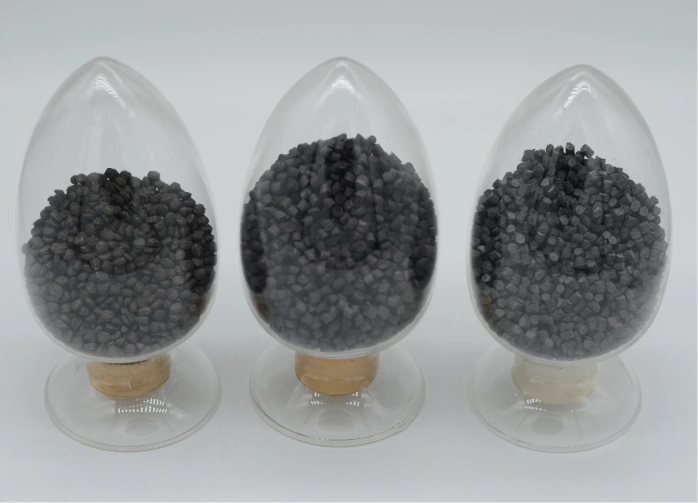
Neodymium rare earth magnets are engineered from alloy powders that undergo sintering or polymer-bonding, forming either fully dense polycrystalline structures or composite magnetic materials.
Key Material Characteristics
-
Br up to ~1.4 Tesla
-
Maximum energy product (BHmax) above 50 MGOe (sintered grades)
-
Good thermal performance with proper grade selection
-
Excellent compatibility with coatings (Ni-Cu-Ni, epoxy, phosphate, Parylene)
Manufacturing Routes
-
Sintered NdFeB: Highest performance, brittle, requires coatings
-
Injection molded NdFeB: Lower magnetic output but enables complex geometries and over-molding
Related article: Sintered vs. Injection Molded Magnets: A Technical Comparison
Applications Across Multiple Industries
Automotive & Transportation Systems
Neodymium magnets are heavily integrated in modern vehicles, including:
-
BLDC traction motors
-
EPS systems
-
ABS and wheel-speed sensors
-
Fuel pump motors
-
Transmission and position sensors

Home Appliances & Consumer Technology
Appliance manufacturers rely on NdFeB magnets for compactness and efficiency:
-
Inverter compressor motors
-
High-speed fans
-
Precision latching systems
-
Washing machine drive motors
-
Audio components
Industrial Automation & General Machinery
Industrial equipment increasingly demands high power density and precise control—areas where rare earth magnets excel:
-
Servo motors
-
Magnetic couplings
-
Linear actuators
-
High-speed spindle systems
-
Industrial sensing devices
Renewable Energy & Power Systems
Magnets have enabled major advances in energy conversion technologies:
-
Wind turbine generators
-
Micro-turbine energy recovery units
-
High-efficiency power conversion systems
-
Magnetic bearings and magnetically levitated stages
Consumer Electronics & Communication Devices
Miniaturization relies heavily on small rare earth magnets:
-
Smartphone haptic motors
-
Laptop speakers
-
Vibration modules
-
Hall-effect sensor assemblies
-
Camera autofocus mechanisms
Robotics & Mechatronics
Small and strong magnets are essential in:
-
Micro-grippers
-
Precision encoders
-
Autonomous navigation systems
Medical Devices & Laboratory Instruments
NdFeB magnets support a range of medical and scientific equipment:
-
MRI positioning components (non-core magnet)
-
Surgical instruments
-
Magnetic separation systems
-
Dental devices
-
Microfluidic control modules
Aerospace & Defense Systems
Critical systems requiring weight reduction and extreme reliability adopt NdFeB magnets for:
-
Satellite drive mechanisms
-
High-efficiency power modules
-
Magnetic torque rods
-
Precision navigation instruments
Engineering Considerations When Selecting Rare Earth Magnets
When choosing between small rare earth magnets, strong earth magnets, or neodymium rare earth magnets, engineers should evaluate:
-
Required magnetic force and torque density
-
Working temperature and thermal cycling patterns
-
Corrosion risk and environmental exposure
-
Dimensional constraints and available geometry
-
Assembly interface (press-fit, glue bonding, over-molding)
-
Mechanical loading and need for structural reinforcement
-
Magnetic stability over time
Conclusion
Small rare earth magnets, strong earth magnets, and neodymium rare earth magnets power some of the most advanced technologies of the modern age. Their strength, compactness, and versatility make them essential across automotive, industrial, consumer electronics, robotics, medical equipment, and renewable energy sectors—far beyond only the fields linked within a typical sitemap.