

When choosing a motor for a device or product, many engineers and buyers eventually ask the same question: Are brushless DC motors better than brushed motors?
Because BLDC motors have become popular in modern automation, robotics, and home devices, this question shows up frequently in “brush vs brushless motor” comparisons.
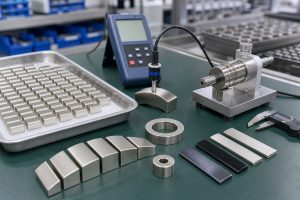
Brushless DC motors are widely considered more efficient and reliable than brushed motors, but the performance gap is not only due to electronic commutation. A major factor is the magnets used in the motor. From sintered ferrite magnets to injection-molded bonded magnets, the choice of magnet materials directly affects torque density, motor size, heat generation, and long-term durability.
This guide helps you understand the differences clearly and hows how magnet selection influences BLDC motor design so you can choose the right motor for your application.
What Is a Brushless DC Motor (BLDC Motor)?
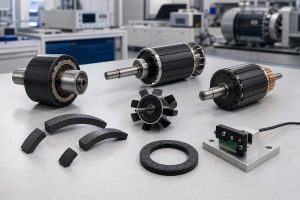
A brushless DC motor operates without mechanical brushes. Instead of using a commutator and carbon brushes like a brushed motor, it uses:
- Permanent magnets on the rotor
- An electronic controller that switches current digitally
This electronic commutation makes BLDC motors more efficient, durable, and quieter than traditional brushed motors.
Brush vs Brushless Motor: What’s the Difference?
Here’s a simple comparison:
| Feature | Brushed Motor | Brushless DC Motor |
| Commutation | Mechanical (brushes) | Electronic |
| Maintenance | High (brush wear) | Low |
| Efficiency | Moderate | High |
| Lifespan | Shorter | Longer |
| Noise Level | Louder | Quieter |
| Cost | Cheap | Higher upfront |
| Control Precision | Limited | Excellent |
This comparison highlights why brushless DC motors are the preferred choice in advanced applications. The absence of brushes allows BLDC motors to run smoother, cooler, and with greater control—ideal for modern automated devices.
Why Brushless DC Motors Are Considered Better
1. Higher Efficiency
BLDC motors eliminate friction created by brushes, allowing them to convert more electrical energy into mechanical energy. This means:
- Less heat
- Lower power loss
- Better battery performance in portable devices
2. Longer Operating Life
No brushes mean significantly less wear. A typical brushless DC motor can last 2–5 times longer than a brushed motor.
3. Low Maintenance
With no brushes to replace, BLDC motors require little to no maintenance—ideal for enclosed or hard-to-reach installations.
4. Low Noise and Smooth Operation
Because there are no brushes rubbing inside the motor, BLDC motors run very quietly.
This is why they are used in:
- Smart home devices
- Electric curtain motors
- Medical and office equipment
5. Precise Speed and Torque Control
The electronic controller allows fine-tuned motor performance, making BLDC motors ideal for:
- Robotics
- Drones
- Automated systems
- Precision tools
The Role of Magnet Materials in Brushless DC Motors
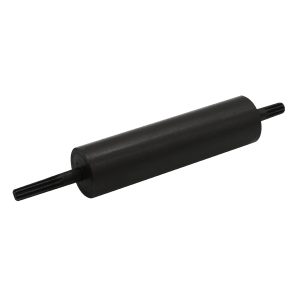
Of course, the performance of a BLDC motor doesn’t only depend on its electrical design—magnet material selection plays a major role as well. Magnet selection is one of the most critical factors influencing torque output, motor size, and overall performance in a brushless DC motor, especially when the design requires a slim and compact rotor.
Why Sintered Ferrite Magnets Are Not Always Ideal for Slim Rotors
Traditional sintered ferrite magnets provide strong magnetic properties, but they come with limitations in applications where:
- The motor must stay slim or have a restricted diameter
- Complex axial pole structures (such as 8-pole axial designs) are required
- Weight or balance needs tighter control
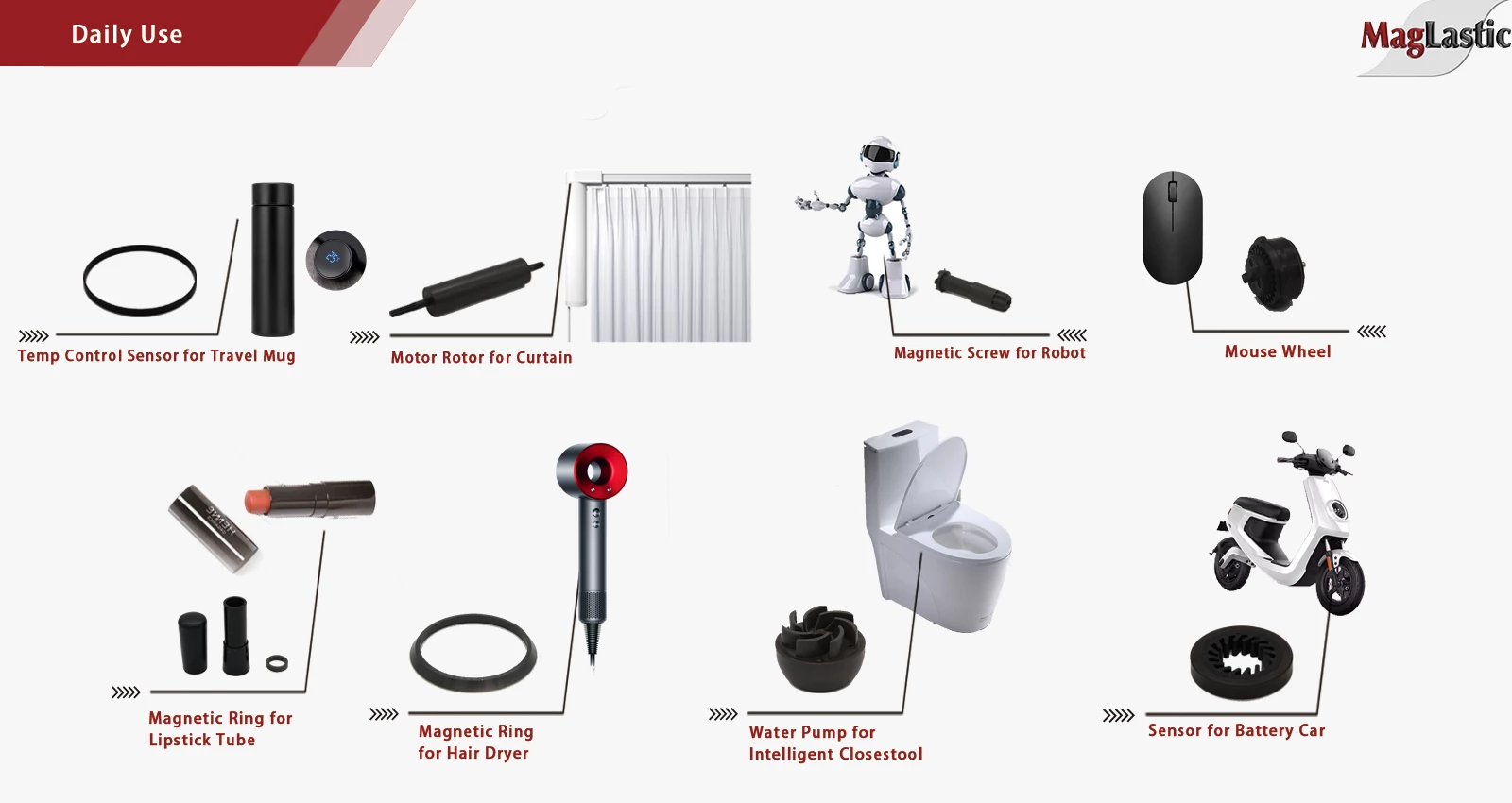
In the case of narrow BLDC motors—such as those used in electric curtain systems with a 90 mm height—using sintered magnets can lead to oversized rotors and insufficient torque output.
Injection-Molded Magnets as a Better Solution for Compact BLDC Designs
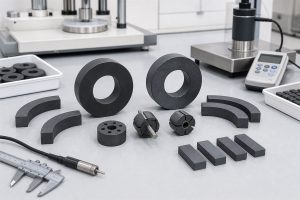
To overcome the size limitation, injection-molded ferrite magnets (bonded ferrite magnets) are often preferred.
Compared with sintered ferrite magnets, they offer significant advantages:
- More design flexibility for slim or complex rotor shapes
- Better weight distribution, improving motor balance
- Reduced risk of oversizing while maintaining required torque
- Cost-effective manufacturing, especially using Ferrite/PA12 compounds
- Capable of achieving surface magnetic field strength up to 1700 Gs
This makes them ideal for compact brushless DC motors used in home automation, such as electric curtains, smart blinds, and other space-restricted systems.
When a Brushless DC Motor Might Not Be the Best Choice
Even though BLDC motors are superior in many ways, brushed motors still make sense in certain applications.
1. Low-Cost or Disposable Products
Brushed motors are cheaper and can be perfectly adequate for:
- Toys
- Simple gadgets
- Low-duty cycle devices
2. Simple Controls
BLDC motors require an electronic controller, which adds complexity and cost.
Brushed motors can run directly from a battery.
3. Very Low-Speed, Low-Precision Needs
If your application doesn’t need:
- precise speed regulation
- silent operation
- long lifespan
then a brushed motor may be more cost-effective.
Applications Where Brushless DC Motors Excel
Brushless DC motors are widely used in:
- Electric curtains and smart blinds
- HVAC and ventilation fans
- Water pumps and compressors
- Robotics and automation
- Power tools
- Electric vehicles
- Drones
- Smart home devices
Their reliability and efficiency make them ideal for continuous or long-term operations.
Conclusion: Are Brushless DC Motors Better?
Overall, brushless DC motors outperform brushed motors in efficiency, noise, lifespan, and control. When combined with optimized magnet materials—such as high-performance injection-molded magnets for slim BLDC rotors—the advantages become even greater.
If your project requires stable torque, compact size, or energy-efficient operation, choosing the right motor and the right magnets will determine your final performance. For most modern applications, a well-designed brushless DC motor with the appropriate magnet materials is the superior choice.