

1. Introduction: Why the Full Magnetic Value Chain Matters
The evolution of magnetic technology in modern engineering
Magnetic systems have evolved from simple permanent magnets into highly engineered components that underpin modern electromechanical systems. Today’s applications—ranging from electric vehicles and automation to medical devices and renewable energy—demand tighter tolerances, higher energy density, and greater reliability than ever before. As a result, magnet performance can no longer be evaluated in isolation; it must be understood as part of an integrated engineering chain.
Why understanding the entire chain improves system design and reliability
Failures in magnetic systems rarely originate from a single factor. Instead, they emerge from misalignment between material properties, manufacturing processes, magnet geometry, assembly design, and operating conditions. A system-level understanding of the full magnetic value chain enables engineers to reduce risk, optimize performance, and control lifecycle costs.
Overview of the “Material → Process → Magnet → Assembly → Application” framework
This article presents a structured engineering framework that connects magnetic material science with real-world applications. By tracing the transformation from raw magnetic materials through forming processes, finished magnets, assemblies, and final industries, it highlights how early-stage decisions propagate through the entire system.

2. Magnetic Materials: The Foundation of Magnetic Performance
2.1 Classification of Magnetic Materials
Hard magnetic materials vs. soft magnetic materials
Hard magnetic materials retain magnetization and are used for permanent magnets, while soft magnetic materials exhibit low coercivity and are designed for efficient magnetization and demagnetization in alternating fields. This distinction defines whether a material serves as a field source or a flux conductor within a magnetic system.
Rare earth magnets (NdFeB, SmCo)
Rare earth magnets dominate high-performance applications due to their superior energy density. Neodymium-iron-boron (NdFeB) magnets offer the highest magnetic strength, while samarium-cobalt (SmCo) magnets provide enhanced thermal stability and corrosion resistance for extreme environments.
Ferrite and AlNiCo (contextual comparison)
Ferrite magnets remain cost-effective for high-volume, low-to-medium performance applications, while AlNiCo magnets are valued for temperature stability and linear demagnetization characteristics. Both materials serve specific niches despite lower energy products compared to rare earth magnets.
2.2 Key Magnetic Material Parameters
Remanence (Br)
Remanence indicates the residual magnetic flux density after magnetization and directly influences field strength in a magnetic circuit.
Coercivity (HcB, HcJ)
Coercivity defines resistance to demagnetization. Intrinsic coercivity (HcJ) is especially critical in applications exposed to high temperatures or reverse magnetic fields.
Maximum energy product (BHmax)
BHmax represents the usable magnetic energy per unit volume and is a primary metric for comparing magnet grades.
Temperature coefficients and thermal stability
All magnetic materials exhibit temperature-dependent behavior. Understanding reversible temperature coefficients and irreversible thermal losses is essential for long-term system reliability.
2.3 Material Selection Criteria
Performance density requirements
Compact systems require high energy density materials to minimize size and weight without sacrificing output.
Operating temperature range
Thermal limits often dictate material selection more than magnetic strength alone.
Environmental resistance
Corrosion, humidity, and chemical exposure necessitate appropriate material choice and surface protection strategies.
Cost and resource availability
Rare earth availability, price volatility, and processing complexity must be balanced against performance needs.
3. Manufacturing Processes: From Powder to Functional Magnet
3.1 Powder Preparation and Alloy Design
Rare earth alloy melting and strip casting
High-purity alloy preparation ensures uniform microstructure and magnetic consistency.
Hydrogen decrepitation (HD)
HD enables controlled particle breakdown, improving powder morphology for alignment and densification.
Particle size control and magnetic alignment potential
Powder size distribution directly impacts grain orientation, coercivity, and final magnetic performance.
3.2 Magnet Forming Technologies
Sintering process and grain alignment
Sintered magnets achieve maximum magnetic performance through high-temperature densification and crystallographic alignment in an external magnetic field.
Injection molding and polymer-bonded magnets
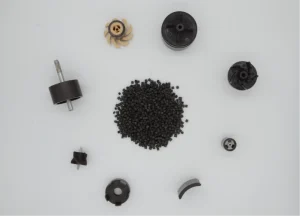
Injection molding combines magnetic powder with polymer binders, enabling complex geometries, tight tolerances, and high-volume production at the cost of reduced magnetic strength.
Compression molding (bonded magnets)
Compression molding offers higher magnetic loading than injection molding while maintaining design flexibility and dimensional stability.
3.3 Post-Processing and Surface Treatment
Machining and tolerance control
Precision grinding and cutting define final dimensions but must account for magnet brittleness.
Coating technologies
Surface treatments such as Ni-Cu-Ni, epoxy, phosphate, and Parylene protect against corrosion and mechanical damage.
Magnetization methods
Axial, radial, and multi-pole magnetization strategies are selected based on assembly and application requirements.
4. Magnet Products: Geometry, Grades, and Performance Output
4.1 Magnet Shapes and Structural Forms
Blocks, discs, rings, arcs, and segmented designs enable optimized magnetic circuits for specific mechanical and spatial constraints. Thin-wall and micro magnets support extreme miniaturization trends.
4.2 Magnet Grades and Performance Mapping
Higher grades increase energy density but may reduce thermal margins. Grade selection is always a balance between strength, temperature resistance, and system safety factors.
4.3 Small and High-Performance Magnets
Small rare earth magnets enable compact, high-efficiency designs, while strong earth magnets support high torque density and power output in demanding systems.
5. Magnetic Assemblies: System-Level Magnetic Engineering
5.1 What Is a Magnetic Assembly?
A magnetic assembly integrates permanent magnets with soft magnetic materials, structural components, and fixation methods to deliver controlled magnetic fields.
5.2 Common Magnetic Assembly Types
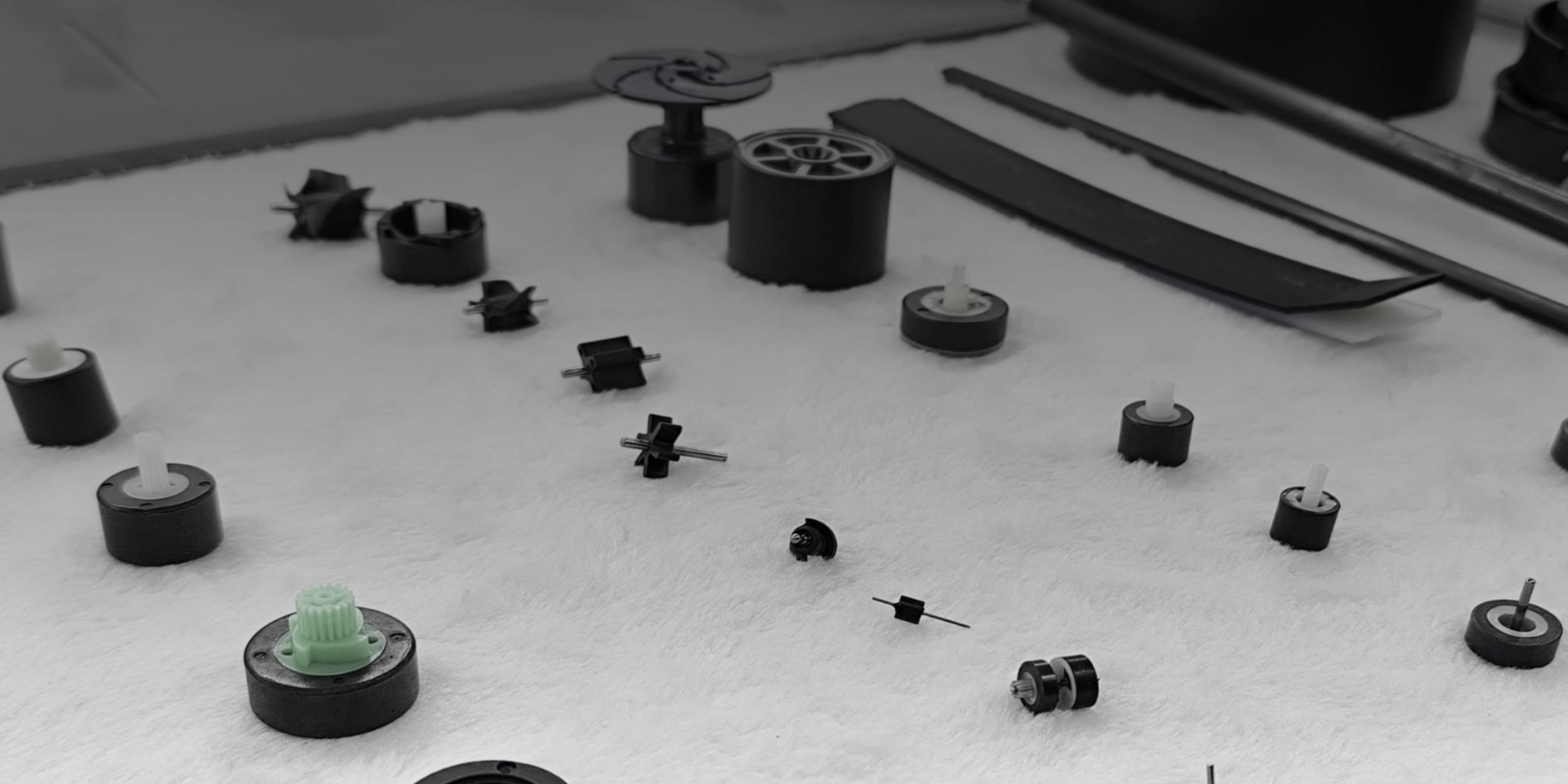
Rotor assemblies, stator-magnet systems, sensor magnet modules, magnetic couplings, and holding systems each require tailored magnetic and mechanical design.
5.3 Engineering Challenges in Magnet Assemblies
Key challenges include field optimization, mechanical stress management, thermal expansion mismatch, and protection against partial demagnetization.

6. Application Industries: Where Magnetic Systems Create Value
6.1 Automotive and Transportation
Electric motors, traction systems, sensors, and actuators rely heavily on high-performance magnetic assemblies.
6.2 Industrial Automation and Equipment
Servo motors, linear motion systems, and magnetic clamping solutions demand precision and repeatability.
6.3 Consumer Electronics and Home Appliances
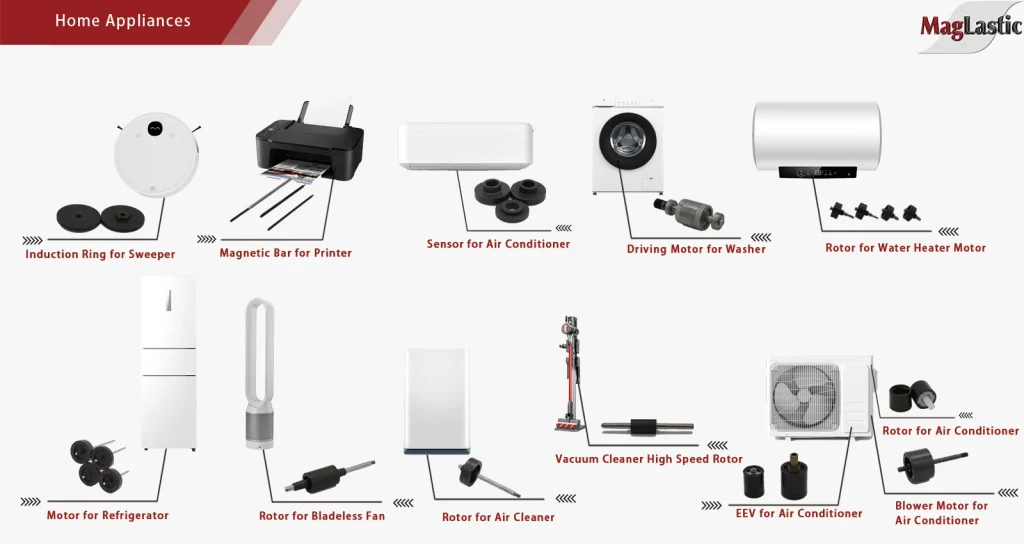
Miniaturized motors, acoustic components, and control systems require consistent magnetic performance in confined spaces.
6.4 Renewable Energy and Power Systems
Wind generators and energy-efficient conversion systems depend on stable, long-life magnetic solutions.
6.5 Medical, Robotics, and Aerospace
These fields prioritize reliability, precision, and safety under strict regulatory and environmental constraints.
7. Engineering Integration: Connecting Each Stage of the Chain
Material selection influences forming processes, which define magnet geometry and assembly feasibility. Early-stage magnetic design reduces downstream costs and prevents common failures such as thermal demagnetization, mechanical cracking, and magnetic inefficiency caused by broken links in the value chain.
8. Conclusion: From Material Science to Application-Level Reliability
A vertically integrated understanding of magnetic systems—from raw materials to application environments—is essential for modern engineering. As industries move toward higher efficiency, electrification, and miniaturization, magnetic solutions will increasingly demand cross-disciplinary expertise and system-level thinking. The future of magnet engineering lies not in isolated components, but in fully optimized magnetic systems designed from the ground up.