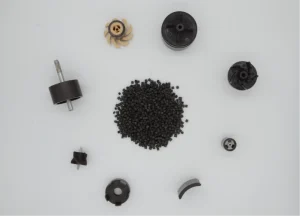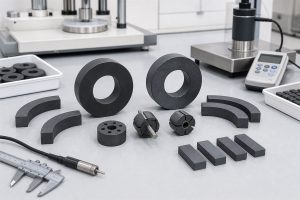


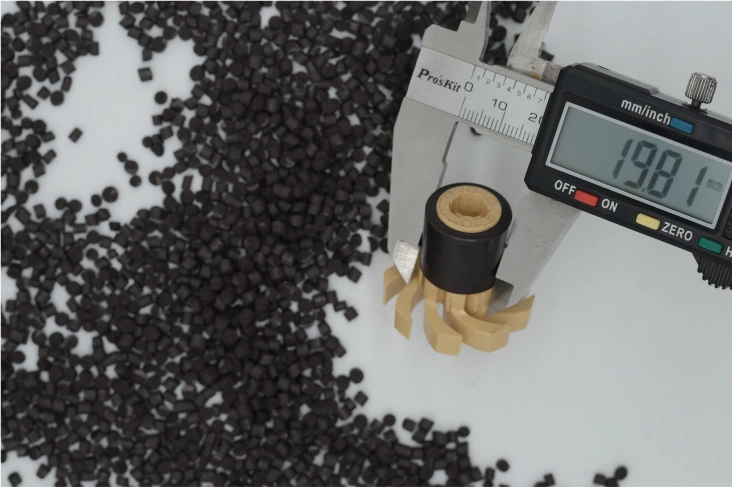
Permanent magnets play a critical role in modern industrial systems, from electric motors and sensors to automotive components and audio equipment. Among the various magnet materials available, the ferrite magnet remains one of the most widely used due to its cost efficiency, stability, and suitability for high-volume production.
This article provides a structured overview of what a ferrite magnet is, its key properties, common ferrite magnet grades, and the major industrial applications where it continues to deliver reliable performance.
What Is a Ferrite Magnet?
A ferrite magnet, also known as a ceramic magnet, is a type of permanent magnet made primarily from iron oxide combined with barium or strontium carbonate. Through high-temperature sintering, these materials form a hard, brittle ceramic structure with permanent magnetic properties.
Ferrite magnets belong to the family of oxide-based permanent magnets, distinguishing them from rare earth magnets such as neodymium or samarium cobalt. While their magnetic strength is lower than that of rare earth magnets, ferrite magnets offer advantages that make them highly attractive for industrial use, particularly in cost-sensitive and large-scale manufacturing environments.
Due to their stable material composition and non-metallic structure, ferrite magnets are widely used in applications where long-term reliability and environmental resistance are critical.
Key Properties of Ferrite Magnets
Understanding the core properties of ferrite magnets is essential for engineers and procurement teams when evaluating magnet materials for industrial systems.
Magnetic Performance
Ferrite magnets provide moderate magnetic strength, characterized by lower magnetic energy product compared to rare earth magnets. However, they offer high coercivity, meaning they are resistant to demagnetization under external magnetic fields or mechanical vibration.
Temperature Resistance and Stability
One of the major advantages of ferrite magnets is their excellent thermal stability. They typically operate reliably at temperatures up to approximately 250°C, with predictable and gradual changes in magnetic performance as temperature varies.
Corrosion and Chemical Resistance
Unlike many metallic magnets, ferrite magnets are naturally resistant to corrosion and oxidation. They do not require surface coatings such as nickel or epoxy, even in humid or chemically exposed environments.
Mechanical Characteristics
Ferrite magnets are hard but brittle, similar to ceramic materials. While this limits their ability to withstand impact or tensile stress, it also allows them to maintain dimensional stability under compression.
Common Ferrite Magnet Grades and Magnetic Properties
Ferrite magnet grades are used to classify ferrite magnets based on their magnetic performance and material characteristics. Each grade represents a specific range of magnetic properties, including residual flux density (Br), coercivity (Hc and Hci), and maximum energy product ((BH)max). These parameters directly influence how a ferrite magnet performs in real-world applications such as electric motors, automotive components, loudspeakers, and industrial magnetic assemblies.
The table below summarizes commonly used ferrite magnet grades and their typical magnetic properties to support informed selection in industrial applications.
| Material | Br (mT) | Br (kG) | Hcb / Hc (kA/m) | Hcb / Hc (kOe) | Hcj / Hci (kA/m) | Hcj / Hci (kOe) | (BH)max (kJ/m³) | (BH)max (MGOe) |
| Y8T | 200–235 | 2.0–2.35 | 125–160 | 1.57–2.01 | 210–280 | 2.64–3.52 | 6.5–9.5 | 0.8–1.2 |
| Y10T | 200–235 | 2.0–2.35 | 128–160 | 1.61–2.01 | 210–280 | 2.64–3.52 | 6.4–9.6 | 0.8–1.2 |
| Y20 | 320–380 | 3.2–3.8 | 135–190 | 1.70–2.39 | 140–195 | 1.76–2.45 | 18.0–22.0 | 2.3–2.8 |
| Y22H | 310–360 | 3.1–3.6 | 220–250 | 2.76–3.14 | 280–320 | 3.52–4.02 | 20.0–24.0 | 2.5–3.0 |
| Y23 | 320–370 | 3.2–3.7 | 170–190 | 2.14–2.39 | 190–230 | 2.39–2.89 | 20.0–25.5 | 2.5–3.2 |
| Y25 | 360–400 | 3.6–4.0 | 135–170 | 1.70–2.14 | 140–200 | 1.76–2.51 | 22.5–28.0 | 2.8–3.5 |
| Y26H | 360–390 | 3.6–3.9 | 220–250 | 2.76–3.14 | 225–255 | 2.83–3.20 | 23.0–28.0 | 2.9–3.5 |
| Y26H-1 | 360–390 | 3.6–3.9 | 200–250 | 2.51–3.14 | 225–255 | 2.83–3.20 | 23.0–28.0 | 2.9–3.5 |
| Y26H-2 | 360–380 | 3.6–3.8 | 263–288 | 3.30–3.62 | 318–350 | 4.00–4.40 | 24.0–28.0 | 3.0–3.5 |
| Y27H | 370–400 | 3.7–4.0 | 205–250 | 2.58–3.14 | 210–255 | 2.64–3.20 | 25.0–29.0 | 3.1–3.6 |
| Y28 | 370–400 | 3.7–4.0 | 175–210 | 2.20–2.64 | 180–220 | 2.26–2.76 | 26.0–30.0 | 3.3–3.8 |
| Y28H-1 | 380–400 | 3.8–4.0 | 240–260 | 3.02–3.27 | 250–280 | 3.14–3.52 | 27.0–30.0 | 3.4–3.8 |
| Y28H-2 | 360–380 | 3.6–3.8 | 271–295 | 3.41–3.71 | 382–405 | 4.80–5.09 | 26.0–30.0 | 3.3–3.8 |
| Y30 | 370–400 | 3.7–4.0 | 175–210 | 2.20–2.64 | 180–220 | 2.26–2.76 | 26.0–30.0 | 3.3–3.8 |
| Y30BH | 380–390 | 3.8–3.9 | 223–235 | 2.80–2.95 | 231–245 | 2.90–3.08 | 27.0–30.0 | 3.4–3.8 |
| Y30H-1 | 380–400 | 3.8–4.0 | 230–275 | 2.89–3.46 | 235–290 | 2.95–3.64 | 27.0–32.0 | 3.4–4.0 |
| Y30H-2 | 395–415 | 3.95–4.15 | 275–300 | 3.46–3.77 | 310–335 | 3.90–4.21 | 27.0–32.5 | 3.4–4.1 |
| Y32 | 400–420 | 4.0–4.2 | 160–190 | 2.01–2.39 | 165–195 | 2.07–2.45 | 30.0–33.5 | 3.8–4.2 |
| Y32H-1 | 400–420 | 4.0–4.2 | 190–230 | 2.39–2.89 | 230–250 | 2.89–3.14 | 31.5–35.0 | 4.0–4.4 |
| Y32H-2 | 400–440 | 4.0–4.4 | 224–240 | 2.81–3.02 | 230–250 | 2.89–3.14 | 31.0–34.0 | 3.9–4.3 |
| Y33 | 410–430 | 4.1–4.3 | 220–250 | 2.76–3.14 | 225–255 | 2.83–3.20 | 31.5–35.0 | 4.0–4.4 |
| Y33H | 410–430 | 4.1–4.3 | 250–270 | 3.14–3.39 | 250–275 | 3.14–3.46 | 31.5–35.0 | 4.0–4.4 |
| Y34 | 420–440 | 4.2–4.4 | 200–230 | 2.51–2.89 | 205–235 | 2.58–2.95 | 32.5–36.0 | 4.1–4.5 |
| Y35 | 430–450 | 4.3–4.5 | 215–239 | 2.70–3.00 | 217–241 | 2.73–3.03 | 33.1–38.2 | 4.2–4.8 |
| Y36 | 430–450 | 4.3–4.5 | 247–271 | 3.10–3.41 | 250–274 | 3.14–3.44 | 35.1–38.3 | 4.4–4.8 |
| Y38 | 440–460 | 4.4–4.6 | 285–305 | 3.58–3.83 | 294–310 | 3.69–3.90 | 36.6–40.6 | 4.6–5.1 |
| Y40 | 440–460 | 4.4–4.6 | 330–354 | 4.15–4.45 | 340–360 | 4.27–4.52 | 37.5–41.8 | 4.7–5.3 |
Major Applications of Ferrite Magnets
Thanks to their material stability and affordability, ferrite magnets are used across a wide range of industries.
Electric Motors and Generators
Ferrite magnets are extensively used in AC motors, DC motors, and small generators, particularly in fans, pumps, and household appliances. Their resistance to demagnetization and thermal stability make them ideal for continuous operation in motor systems.

Automotive Applications
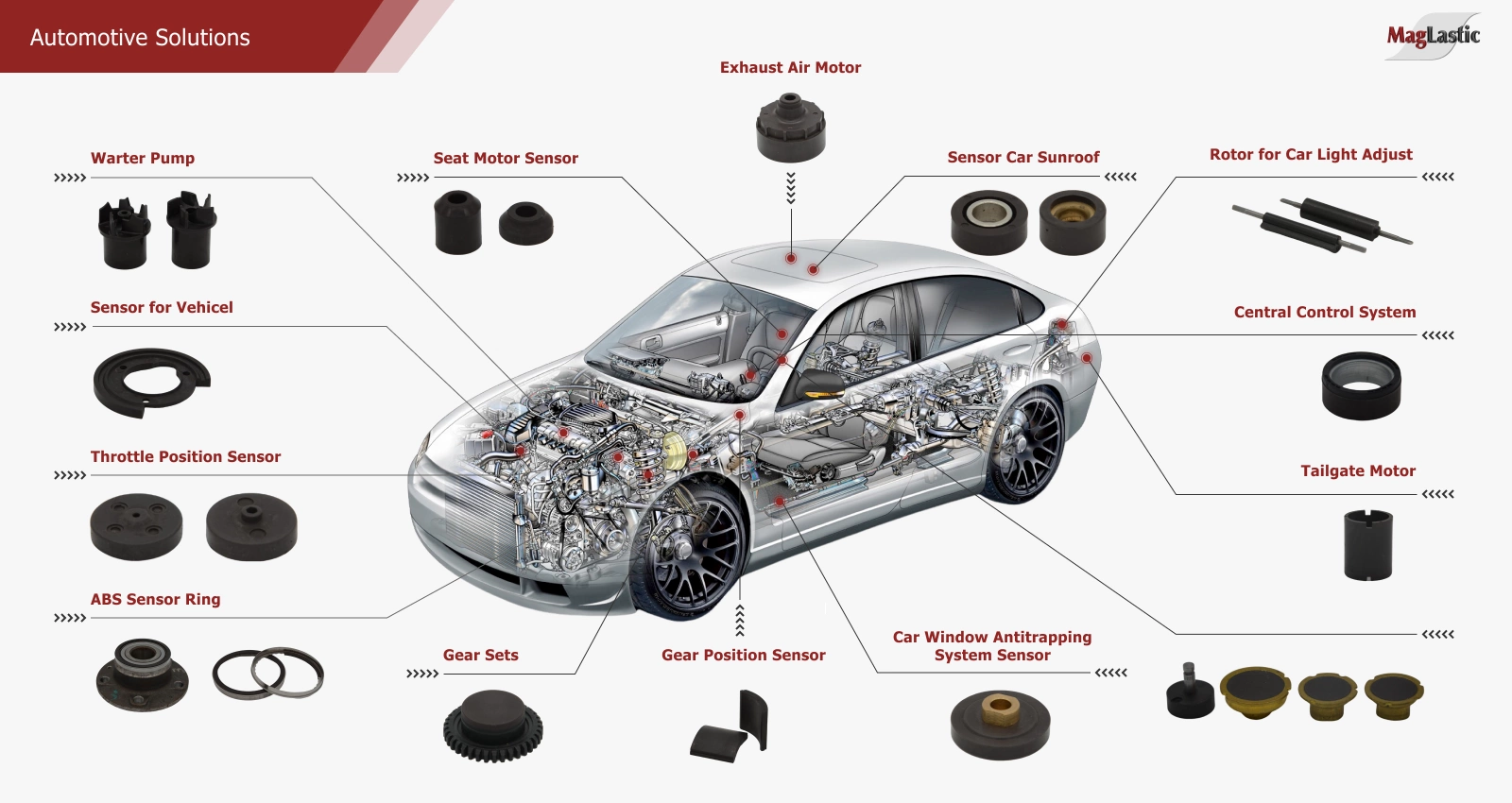
In the automotive industry, ferrite magnets are found in wiper motors, seat adjustment systems, window lifts, and various sensors. Their ability to withstand heat, vibration, and moisture aligns well with automotive operating conditions.
Loudspeakers and Audio Equipment
Ferrite magnets are widely used in loudspeakers and audio systems, where they form the core of the magnetic circuit. Their consistent magnetic field and cost-effectiveness make them suitable for both consumer and professional audio products.
Industrial Sensors and Magnetic Assemblies
In industrial automation, ferrite magnets are commonly used in position sensors, speed detection systems, and custom magnetic assemblies. Their stability and resistance to environmental factors support reliable sensing and long service life.
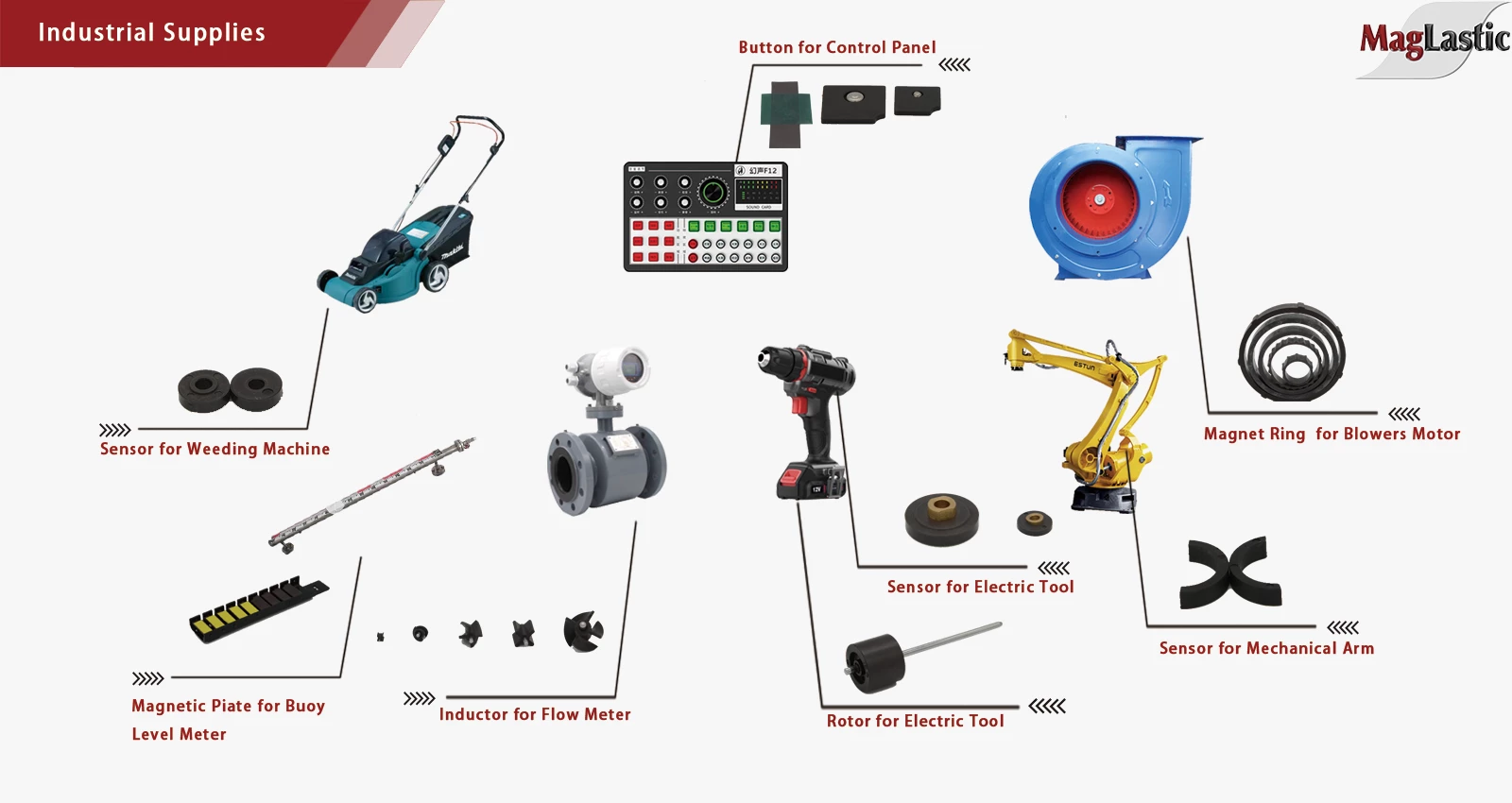
Why Ferrite Magnets Remain Widely Used in Industry
Despite advancements in magnetic materials, the ferrite magnet continues to play a vital role in industrial manufacturing. Its advantages include:
- Stable and predictable performance
- Strong resistance to corrosion and temperature variation
- Cost efficiency for high-volume production
- Secure and diversified raw material supply
These characteristics make ferrite magnets a practical and dependable choice for many engineering applications.
Conclusion
A ferrite magnet is not defined by maximum magnetic strength, but by reliability, stability, and economic value. By understanding its key properties, selecting appropriate ferrite magnet grades, and applying them correctly in industrial systems, manufacturers can achieve efficient and cost-effective solutions.
From electric motors to automotive components and industrial sensors, ferrite magnets continue to support modern manufacturing with proven performance and long-term reliability.