

Introduction
At the beginning of 2026, the rare-earth magnet industry witnessed another strong surge in prices. Praseodymium–neodymium (PrNd) metal prices have broken through USD 135,000–140,000 per ton. This is not an isolated short-term fluctuation. In recent years, driven by the explosive growth of high-end manufacturing industries such as new energy vehicles, wind power, and robotics, the demand for praseodymium and neodymium has continued to rise. Coupled with policy constraints on the supply side of rare earth resources, a sustained upward shift in the price center has become the new normal.
For downstream magnetic material manufacturers, every fluctuation in PrNd prices directly impacts production costs. Against this industrial backdrop, finding an alternative material that maintains high performance while reducing dependence on PrNd volatility has become an urgent priority. Samarium-iron-nitrogen (SmFeN) permanent magnet materials are emerging as a key solution. With their unique performance advantages, they are poised to enter a new stage of industrial adoption.
What is Samarium-Iron-Nitrogen (Sm-Fe-N)?
Sm-Fe-N is not a newly emerging material. First discovered in 1990 by researchers, it is widely regarded as the next-generation rare earth permanent magnet material following SmCo and NdFeB.
However, due to the complexity of its preparation process, SmFeN did not achieve large-scale industrial application for many years. Today, driven by technological progress and increasing cost pressures, SmFeN is entering a phase of accelerated commercialization.
High Performance and Thermal Stability
In terms of performance, SmFeN is a true “powerhouse”:
- Maximum energy product: approximately 59 MGOe, comparable to NdFeB magnets
- Curie temperature: approximately 476°C, significantly higher than NdFeB
This enables SmFeN magnets to maintain more stable magnetic performance in demanding environments such as new energy vehicles, robotics, and UAVs.
Key Advantages of Sm-Fe-N
- Superior magnetic performance (vs. iso-NdFeB) → Enables lightweight and miniaturization
- Small powder particle size → High molding freedom and flexibility, low mold wear
- High resistance of bonded magnets → Low eddy current
- Excellent corrosion resistance (vs. NdFeB) → No coating required
- Stable raw material cost → Relatively fixed product prices
- Compatible with other magnetic powders for customized products → Wide selection range.
Sm-Fe-N vs. NdFeB: A Comparative Analysis
| Performance Indicator | Samarium-Iron-Nitrogen (Sm₂Fe₁₇N₃) | Neodymium-Iron-Boron (Nd₂Fe₁₄B) |
| Saturation Magnetization | Approx. 1.54T | Approx. 1.61T |
| Curie Temperature | Approx. 476°C | Approx. 315°C |
| Corrosion Resistance | Excellent | Relatively Poor |
| Key Rare Earth Elements | Samarium (sufficient supply, stable price; no heavy rare earth elements such as dysprosium and terbium required) | Neodymium, Praseodymium (tight supply, significant price fluctuation) |
Cost-Effectiveness of Sm-Fe-N
If performance is the foundation of SmFeN, its cost advantage under volatile PrNd prices is the real breakthrough.
Lower Raw Material Price Volatility
Samarium, the key raw material, is relatively abundant and far less volatile in price compared to neodymium and praseodymium.
Improved Supply Chain Stability
As a result, SmFeN magnets offer:
- Better cost predictability
- Stronger supply chain security
For manufacturers, adopting SmFeN is not just a short-term cost strategy. It is a long-term approach to managing raw material risks.
Manufacturing Process and Technical Characteristics
SmFeN decomposes at temperatures above approximately 600°C, making it unsuitable for traditional high-temperature sintering used in NdFeB production.
Bonded Magnet Technology
Industrial production is mainly achieved through bonding processes:
Mixing SmFeN powder with resin binders
Forming via: Compression molding, injection molding, and extrusion
Advantages of Bonded SmFeN Magnets
Although bonded SmFeN magnets have a lower maximum energy product than sintered NdFeB, they offer:
- Flexible shape design
- High-dimensional accuracy and consistency
- One-step molding
- No need for post-processing
This results in strong overall cost-performance advantages.
Applications of SmFeN Magnets
Thanks to these advantages, Sm-Fe-N magnets are rapidly expanding into various application fields, including:
- Automotive electronics: Seat motors, tailgate motors, etc.
- Home appliances: Water pump motors, fan motors, etc.
- High-end consumer electronics: Components with stringent requirements for magnet performance, thinness and reliability
- Sensors: Position, angle, and speed sensors
- Creative magnetic applications: Magnetic data cables, magnetic buckles, magnetic sheets, cultural and creative products, etc.
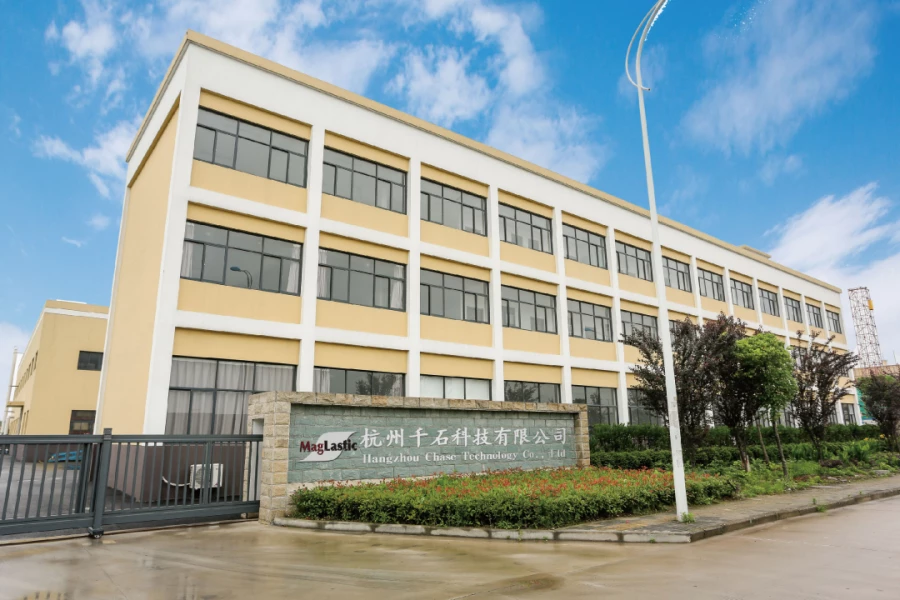
SmFeN Solutions from Hangzhou Chase Technology
With over a decade of R&D investment, Hangzhou Chase Technology has overcome key challenges in SmFeN material development—from powder production to full-scale application.
Since 2018, its SmFeN products have been commercially deployed and validated across multiple industries. The company now operates production lines with an annual capacity exceeding 500 tons of SmFeN powder and composite magnetic materials.
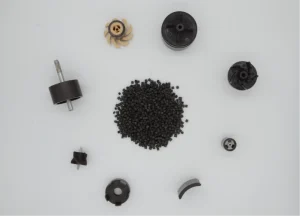
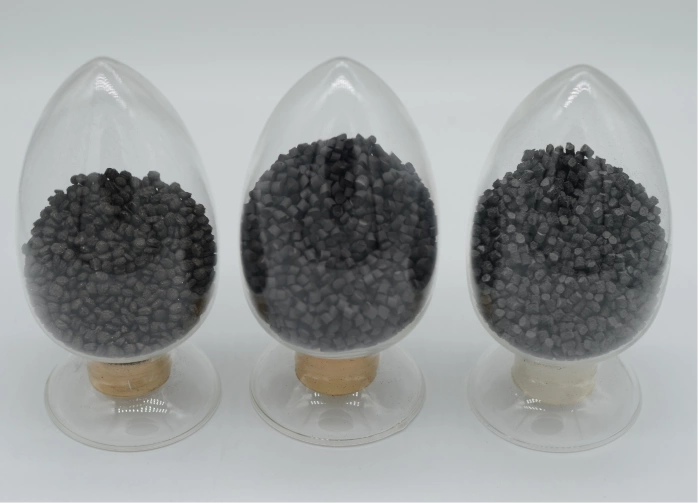
Chase Technology has developed a full range of Sm-Fe-N injection-molded magnetic pellets and devices adapted to different scenario needs.
These products are widely used in:
- Automotive
- Home appliances
- Consumer electronics
- Power tools
- Creative applications

Conclusion
If you are looking for a high-performance and cost-stable alternative to NdFeB magnets, SmFeN materials offer a compelling solution.
As PrNd price volatility continues, SmFeN is transitioning from a niche material to a strategic choice for manufacturers aiming to improve cost control and supply chain resilience.
Contact us today to obtain:
- Customized technical solutions
- Detailed product information
Let’s work together to build a more efficient, lightweight, and reliable magnetic future.