

If you’re sourcing magnetic assemblies for a motor, sensor, or industrial device, you already know the magnet alone isn’t the whole story. The assembly around it, such as the housing, flux-conducting parts, and bonding method, determines whether your end product actually performs as intended.
Understanding the nuances of magnetic assemblies is critical for optimizing product performance and reducing long-term costs for buyers. In this guide, we explore what magnetic assemblies are, where they are used, and how to select the right one for your specific application.
What Exactly Is a Magnetic Assembly?
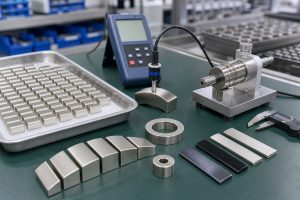
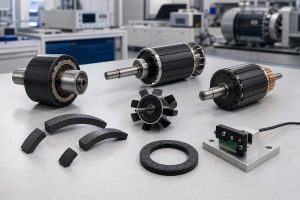
Magnetic assemblies combine magnets with other materials and components, enhancing or directing magnetic properties to serve specific functions. In plain terms, you’re pairing a permanent magnet such as NdFeB, ferrite, or SmCo with steel housings, plastic enclosures, adhesives, or other components to focus the magnetic field exactly where you need it.
Beyond just mechanical protection, another major purpose of magnetic assemblies is increasing magnetic strength. Compared with pure magnets under the same magnetic strength requirement, assemblies offer more obvious cost advantages and typically generate much higher attractive force due to flux-conducting parts that form an integral part of the magnetic circuit.
That’s the real reason engineers don’t just buy standalone magnets. A well-designed assembly gives you more force, better durability, and lower total cost.
Where Are Magnetic Assemblies Actually Used?
Short answer: almost everywhere. But certain industries are driving the bulk of demand right now.
Automotive & EV
The global automotive magnetic products market reached $14.36 billion in 2025 and is expected to hit $22.13 billion by 2033, growing at a CAGR of 5.2%. In the EV market, where efficiency and weight matter most, magnet assemblies in motors have led to more compact and lightweight systems. The ability to create powerful magnetic fields in smaller spaces lets manufacturers build motors that take up less room.

Industrial Automation
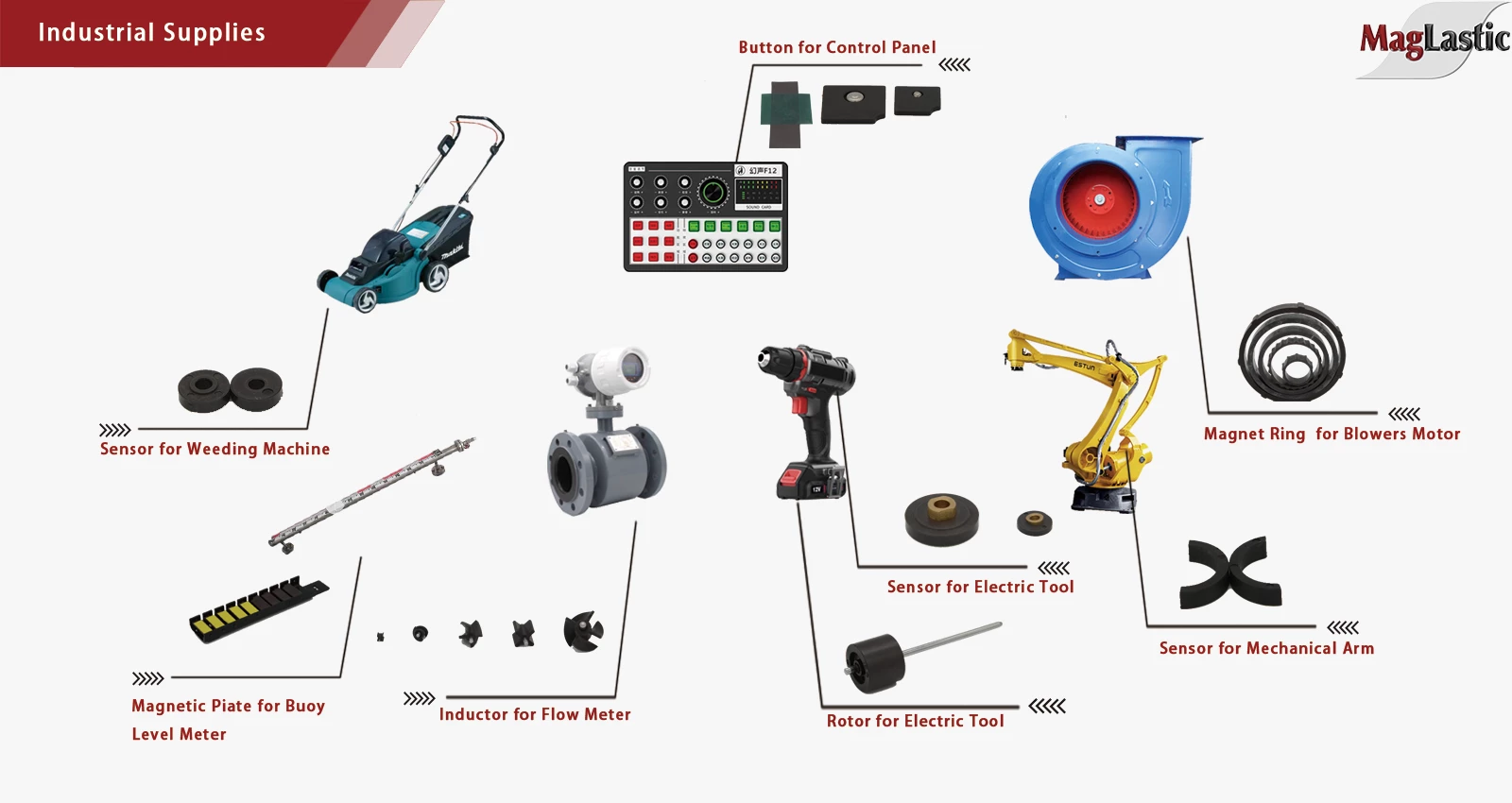
Halbach arrays boost efficiency in industrial robots, voice coil motors power precision assembly equipment, and magnetic couplings provide reliable torque transfer in mixers, pumps, and conveyors. According to estimates from the International Energy Agency, motor-driven systems account for nearly half of global industrial electricity usage, so even small gains in motor efficiency add up fast.
Consumer Electronics & Home Appliances
Devices such as speakers, hard drives, and wireless charging systems depend on precise magnetic assemblies. And for brushless DC motors in appliances, the right assembly design can cut noise and energy consumption at the same time.

How to Choose the Right Magnetic Assembly
Most sourcing mistakes happen before anyone places an order. Treating magnet sourcing as an early-stage engineering decision, rather than a late procurement task, reduces downstream risk and accelerates time to market.
When specifying a magnetic assembly, focus on these five factors:
- Magnetic material type: NdFeB delivers the highest energy density for compact designs. Ferrite is cheaper and more stable in high-humidity environments. SmCo handles extreme heat.
- Operating temperature: High-temperature environments require magnets with high thermal resistance, such as samarium-cobalt.
- Field strength and orientation: Multipole magnetization, radial vs. axial—these choices affect motor performance directly.
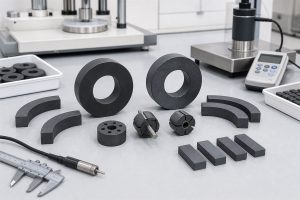
- Dimensional tolerances: Precision tolerances are critical for high-fit applications like automotive motors and optical equipment. Top-tier suppliers can achieve tolerances of ±0.01mm for small magnets.
- Corrosion protection: Protective coatings or stainless-steel housings may be necessary to prevent degradation in harsh environments.
Why Custom Assemblies Often Beat Standard Parts
Off-the-shelf magnets work fine for prototyping. But for production? Custom magnetic assemblies let you match the exact flux pattern, dimensions, and integration method your product needs.
At Chase Technology, our injection molding process produces complex shapes with tight tolerances and multipole magnetization in a single step, which cuts secondary machining and speeds up your production timeline.
What to Look For in a Magnetic Assembly Supplier
Not all magnet manufacturers are equal. Look for suppliers with ISO, RoHS, and REACH compliance to ensure reliability and safety. Beyond certifications, ask these questions:
- Do they offer design support? Does the manufacturer offer design assistance, prototyping, and testing to meet your exact requirements?
- Can they scale? A reputable supplier should handle your order volume and deliver on time.
- What’s their technical depth? A supplier who only fills orders isn’t the same as one who helps you solve problems.
Related article: How to Choose a Reliable Neodymium Magnet Manufacturer in China
Conclusion
Magnetic assemblies are engineered systems designed to direct and amplify magnetic force for a specific application. For buyers, selecting the right assembly is the first step toward operational excellence.
Ready to find the perfect magnetic solution for your business? Browse our comprehensive product catalog or contact our engineering team today to discuss your custom requirements.
FAQs
What’s the difference between a magnet and a magnetic assembly?
A magnet is a single piece of magnetized material. A magnetic assembly is a tool or system that uses magnets or magnet combinations to perform a specific function. Assemblies typically include housings, flux guides, or other components that focus or amplify the magnetic field for a particular application.
Which magnet material is best for high-temperature applications?
High-temperature environments require magnets with high thermal resistance, such as samarium-cobalt (SmCo). SmCo magnets remain stable above 250°C, making them a strong choice for under-hood automotive parts or industrial tools exposed to heat.
Can magnetic assemblies be fully customized?
Yes. Many top manufacturers provide fully customized assemblies for unique applications. Chase Technology offers custom injection molded, compression molded, and sintered magnet assemblies tailored to your project’s specs, including shape, pole configuration, and surface treatment.