

Rare earth magnet supply in 2026 is not only a raw-material issue. For an OEM, the real question is whether the exact grade, geometry, coating and production route approved for a motor, pump or sensor can arrive on schedule.
The International Energy Agency estimates that China represented about 60% of magnet rare-earth mining, 91% of refining and 94% of sintered permanent-magnet production in 2024. That concentration means a licensing delay or qualified-capacity bottleneck can interrupt a specific part even when mine output appears adequate.
For buyers, the risk is therefore not simply whether a material is available somewhere in the market. It is whether the approved source can deliver the specified magnetic properties, dimensional capability, coating system, traceability and documentation within the product’s production window. Procurement, design, quality and operations need one shared continuity plan.

7 Rare Earth Magnet Supply Risks for OEMs
1. Processing is more concentrated than mining
Ore must be separated, converted into metal or alloy, processed into powder, formed, coated, magnetized and inspected. A new mine does not automatically create a qualified magnet source. Map the oxide or alloy route, magnet factory, coating site and magnetization process, not just the company that issues the quote. Also confirm where tooling, fixtures and incoming-inspection gauges are located, because moving those assets can add weeks to a recovery plan.
2. Export documentation can extend lead time
Controls on selected rare-earth items can require classification, end-use evidence and export licensing. A magnet may be produced, inspected and packed but still miss its ship date if the documentation is incomplete. Before ordering, confirm the material status, consignee, end user, end use and which party owns the license file. Keep approved end-use statements and customer declarations current so a buyer does not become the last missing approval in an urgent shipment.
3. High-temperature grades can create hidden exposure
Two NdFeB grades may not have the same supply risk. Magnets for high-temperature motors, pumps and actuators may need Dy or Tb additions; SmCo uses samarium. Review the real operating point, not only ambient temperature. A magnetic-circuit review can show whether another grade or geometry is feasible; otherwise, protect the high-coercivity grade with more robust inventory planning. The decision should consider load line, opposing field, duty cycle, assembly heat transfer and permitted irreversible flux loss.
4. Price volatility can disrupt the BOM
A finished magnet price includes rare-earth input, conversion, yield, machining, coating, magnetization, freight and compliance. Use transparent indexation: agree on the index source, base date, adjustment frequency, currency and trigger. Compare the cost of buffer stock with the cost of a line stop or urgent requalification. A quarterly scenario model gives finance and sourcing teams a defensible range before an allocation event forces a price discussion.
5. Announced capacity is not qualified capacity
New equipment may still need stable powder, tooling, coating validation, capable inspection and customer approval. The constraint can be a coating line or a multi-pole magnetizing fixture, not a press. Ask for part-specific capacity after yield, maintenance and allocation, plus the status of traceability and change control. For high-reliability programs, review the sample plan, process capability evidence and the exact approval needed before an alternate line can ship production parts.
6. Over-specified drawings reduce flexibility
Some drawings lock a supplier grade name, chemistry and process when the true requirement is flux, torque, sensor output, corrosion life or temperature margin. Keep critical functional limits, but define a controlled path for alternatives. Depending on the application, compare sintered, injection-molded and compression-molded magnets. The drawing should state which changes require document review, prototype testing, assembly trials or a full customer requalification.
7. Emergency substitution can create a quality problem
“Same grade” is not a full validation. Suppliers can differ in demagnetization behavior, temperature coefficient, coating adhesion, dimensions and magnetization uniformity. A rushed change can lead to lower torque, sensor offset, noise, corrosion or assembly damage. Build a change matrix for grade, coating, tooling, site and magnetizing fixture, with a defined test level for each. Incoming inspection should verify the properties that matter to the application, not only a supplier certificate.
Practical OEM Action Plan
The most resilient programs treat supply continuity as a controlled product requirement. Assign an owner for each step, save the evidence with the part record and rehearse the response before the part becomes constrained.
- Rank critical magnet part numbers by volume, single-source status, qualification time and line-stop cost.
- Map the full material and process route.
- Flag NdPr, Dy, Tb and Sm exposure.
- Confirm export-document responsibility before shipment.
- Measure usable capacity after yield and allocation.
- Qualify a second route before disruption.
- Set inventory by recovery time, including licensing, production, freight and validation.
- Review the plan quarterly with procurement, engineering, quality and operations.
A simple part-level risk card can make this review operational: record the current source, approved alternates, required documents, recovery time, available stock, test status and the next action owner. This turns supply continuity from an informal discussion into a repeatable release-control process.
How Chase Magnet Can Help
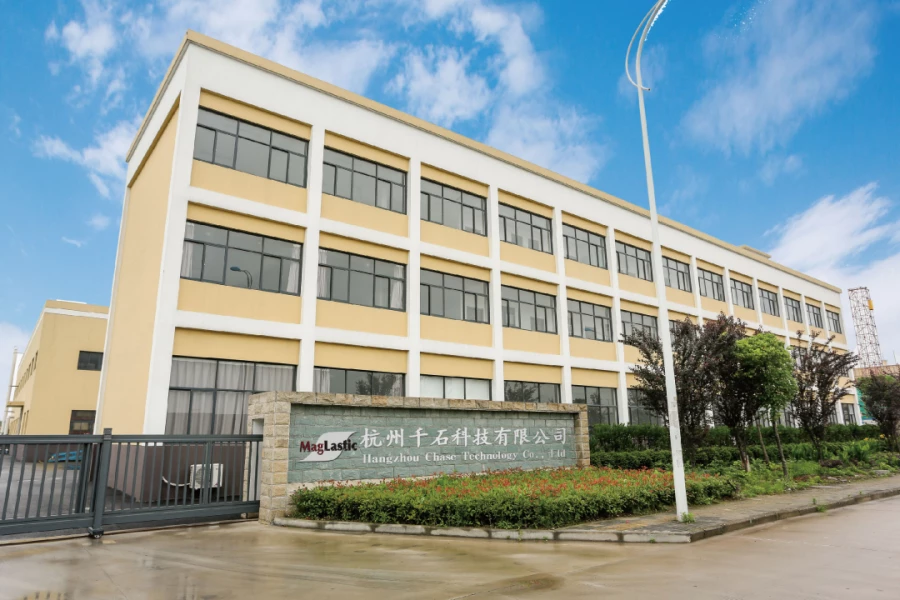
Chase Magnet supports OEM teams with material and process selection, magnetic-circuit simulation, prototyping and quality planning. This helps teams compare performance, temperature, geometry, qualification effort and supply risk before a shortage forces a rushed decision. Early review is especially useful when a part needs more than one feasible material or process route.
Contact Chase Magnet with your drawing, annual volume, operating temperature and approval requirements to review a more resilient magnet solution.
FAQ
Is there a global rare earth magnet shortage in 2026?
Not every grade is in shortage at the same time. Concentrated refining, magnet production, licensing and qualification can interrupt specific parts even when total material output appears sufficient.
Which elements create the greatest supply risk?
Nd and Pr are core inputs for NdFeB. Dy and Tb may be important for high-temperature grades, while Sm is central to SmCo. Risk depends on the actual composition and process route.
How much magnet inventory should an OEM hold?
There is no universal target. The buffer should cover realistic recovery time, including documentation, production, coating, magnetization, freight and customer requalification.
Can ferrite, SmCo or bonded magnets replace sintered NdFeB?
Sometimes, but rarely as a direct swap. Alternative materials differ in magnetic output, temperature behavior, corrosion resistance, geometry and cost, so the magnetic circuit and assembly must be validated.