

A fan that runs all day. A cordless tool that needs more battery life. A pump tucked into a space nobody wants to open for repairs. These products look different, but their motor requirements often overlap.
You want useful power, less noise, and fewer maintenance headaches. That’s where BLDC motor advantages become worth a closer look. Brushless DC motors can deliver all three, along with better control and more flexibility in your design.
Still, “brushless” isn’t a magic performance label. The motor, controller, rotor magnets, and operating conditions have to work together. Let’s walk through eight advantages and what they actually mean for your product.

What Makes a BLDC Motor Different?
A brushed DC motor uses brushes and a mechanical commutator to switch current. A BLDC motor uses electronic switching instead. Its controller energizes the stator windings in sequence, creating a magnetic field that drives a permanent-magnet rotor. That change removes a sliding electrical contact and gives the electronics more control over motion.
If you want the broader brushed-versus-brushless comparison, our guide, Are Brushless DC Motors Better?, covers that decision. Here, we’ll focus on the benefits you can design around.
Key BLDC Motor Advantages
1. Higher Efficiency Can Reduce Energy Use
Efficiency is usually the first benefit people notice. BLDC motors avoid brush-contact losses. Their permanent-magnet rotor also needs no electrical supply to create its magnetic field. With a suitable design and drive, more input power can become useful mechanical output.
For a battery-powered product, that can mean longer runtime at the same workload. For a continuously running fan, it can mean lower energy use. I would compare the complete motor-and-controller system at your normal speed and torque. A peak efficiency figure doesn’t tell you how the product performs through its whole operating cycle.
2. No Brush Replacement Means Less Routine Maintenance
Brushes wear as they slide against the commutator. Removing them removes the need to inspect or replace that particular component. You also avoid brush dust and brush-related contact problems.
This matters when access is difficult. Think about a ventilation unit above a ceiling or a motor buried inside an appliance. Less scheduled motor service can save more than the price of a replacement part. It can save the time needed to reach it. You still need to consider bearings, lubrication, seals, and the equipment around the motor.
3. Removing Brush Wear Can Support Longer Service Life
Maintenance and service life are related, but they aren’t identical. Maintenance asks how often you need to service a motor. Service life asks how long it can keep doing its job. Without brushes, one common wear mechanism disappears.
That gives you a useful starting point for long-running equipment. It doesn’t guarantee a fixed number of hours, though. Bearing loads, temperature, vibration, and controller reliability still matter. Ask for life-test conditions that resemble your application. A cool, lightly loaded test won’t tell you much about a hot pump running around the clock.
4. High Power Density Helps You Build Smaller Products
A well-designed BLDC motor can deliver useful torque from a compact package. That’s attractive when every millimeter counts, whether you’re building a handheld tool, a small cooling fan, or a slim home-automation device.
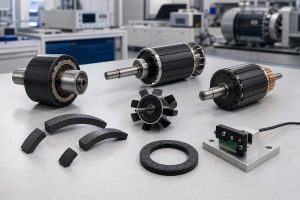
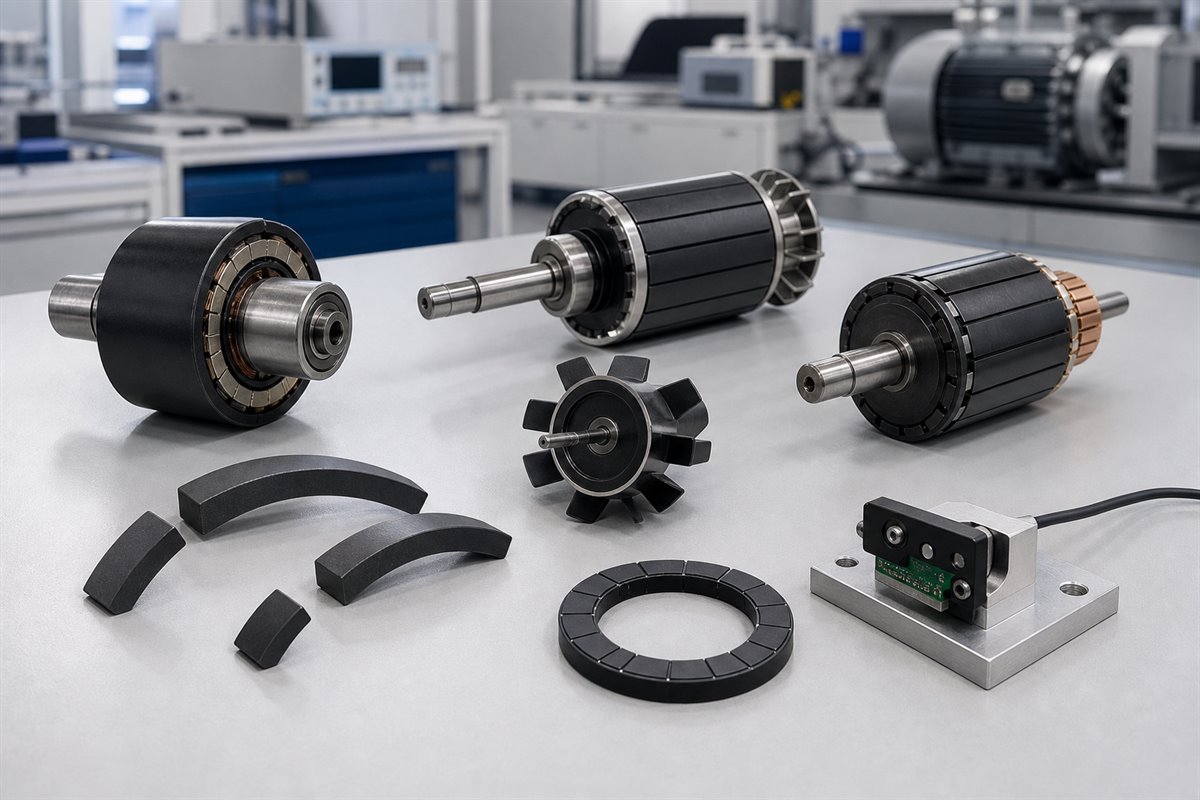
The rotor magnet is part of that packaging decision. Its material, shape, and pole pattern influence what you can achieve within the available space. Chase’s motor rotor products are a relevant starting point for that discussion. Remember to include the controller and cooling requirements when comparing package sizes, rather than looking at the motor alone.

5. Electronic Control Makes Speed and Torque Easier to Manage
A BLDC controller can adjust winding current and switching timing to match the workload. With suitable feedback and control loops, you can regulate speed, limit torque, and create controlled acceleration.
Imagine a pump facing changing pressure. You want it to respond, not simply slow down unpredictably. This is where control becomes a practical product benefit. For reliable operation near zero speed, check the startup strategy carefully. Basic back-EMF sensorless control has limited position information at standstill. Hall sensors or other suitable feedback may be needed for your requirements.
6. Quieter Operation Can Improve the User Experience
No brushes means no brush-contact noise. That can help in products people hear for hours, such as desk fans, air purifiers, and household pumps. The benefit isn’t just a lower sound level. A less irritating tone can matter just as much.
But a BLDC motor isn’t automatically silent. Bearings, airflow, vibration, and switching can still generate noise. Six-step commutation can also produce torque ripple. Suitable sinusoidal control or field-oriented control can improve smoothness. I would listen to the complete product across its speed range, including startup, rather than judge it from a single steady-speed recording.
7. A Broad Speed Range Gives You More Operating Flexibility
Electronic commutation removes brush-related speed constraints. With the right motor and controller, BLDC systems can support a useful range of operating speeds. You can adapt output to demand instead of relying on one fixed operating point.
A fan, for example, might run slowly during light cooling demand and faster when temperatures rise. Don’t read “broad range” as unlimited speed or constant torque everywhere. Supply voltage, back EMF, current limits, bearing capability, and rotor retention still set boundaries. Check the rated operating envelope, especially if the product spends time near either end of the range.
8. Stationary Windings Can Make Heat Removal Easier
In a conventional inner-rotor BLDC motor, the windings sit on the stationary stator near the housing. This arrangement can provide a more direct heat path than windings on a rotating armature. It helps you plan cooling for continuous operation.
Housing contact, airflow, winding losses, and ambient temperature still decide the actual result. Other motor layouts have different thermal paths. Rotor magnets need attention too: temperature and opposing magnetic fields can affect their performance. Validate the chosen magnet grade under your worst operating conditions, not just the room-temperature specification.
How Rotor Magnets Help Deliver BLDC Motor Advantages
These advantages come from the whole system. A stronger magnet alone won’t guarantee better efficiency, quieter running, or longer life. The magnetic circuit and mechanical assembly need to fit the job.
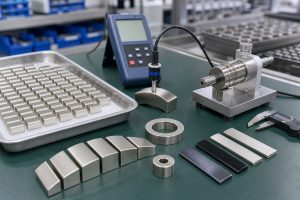
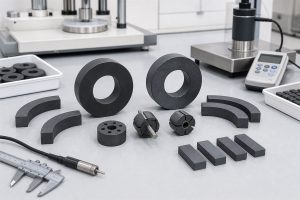
For complex shapes and integrated components, injection-molded magnets offer useful design options. Other applications may favor sintered magnets. Compare the required field, temperature resistance, dimensional tolerances, and retention method before choosing. Our guide to bonded ring versus sintered arc rotor magnets explores that choice.
Before approving a rotor, write down what success looks like. Check input power at the target workload. Listen for unwanted tones at low and high speed. Measure temperature after sustained operation. Then repeat the checks across representative samples. This gives you a clearer picture than choosing a magnet from one headline specification. Chase’s magnetic simulation capabilities can help evaluate a proposed magnetic design before tooling. Treat simulation as part of the development process, then confirm the result with physical motor testing.
When Are BLDC Motor Advantages Worth the Extra Cost?
BLDC motors need electronic drive circuitry. That adds cost and design work. For a low-cost product with short, occasional use, a simple brushed motor may still make sense.
I would start with your priorities: runtime, energy use, sound, service access, or speed control. Then test the benefit that matters most. Compare total system cost over the expected usage, not just the motor purchase price. That’s a more useful decision than choosing brushless simply because the label sounds better.
Working on a BLDC rotor? Share your requirements with Chase, including dimensions, pole count, speed, and temperature. We can discuss the magnetic component options that fit your design.
Frequently Asked Questions
What are the main advantages of a BLDC motor?
The main advantages are efficient operation, no brush replacement, potential for longer service life, compact power delivery, flexible control, quieter operation, a broad speed range, and favorable heat removal in suitable motor layouts.
Are BLDC motors maintenance-free?
No. They eliminate brush maintenance, but bearings, seals, connections, and cooling arrangements may still need attention. Follow the requirements of the complete motor system.
Do stronger magnets always improve BLDC performance?
No. Magnet strength must suit the motor’s magnetic circuit, winding, controller, and temperature limits. Geometry, pole consistency, and mechanical retention matter alongside magnetic strength.