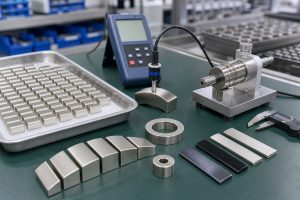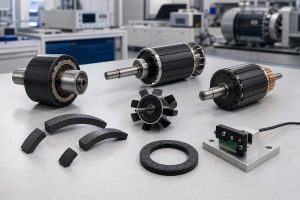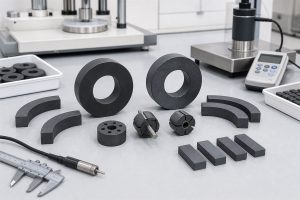


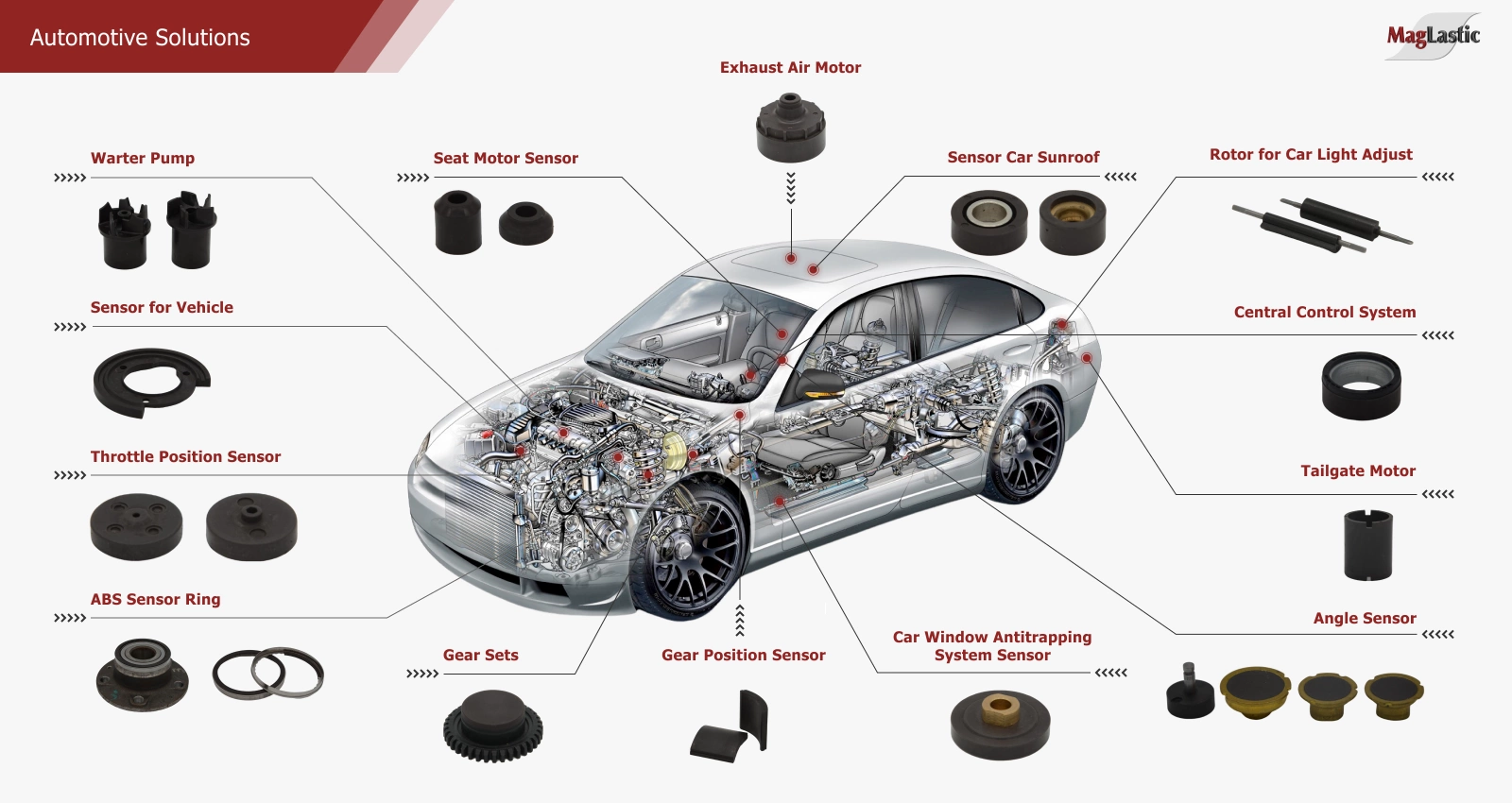
Modern vehicles rely heavily on wheel speed sensors for safety and performance features such as ABS (Anti-lock Braking System) and traction control. At the heart of these sensors lies the ABS magnetic ring, which can be made from ferrite ring magnets or rubber ferrite magnets. Choosing the right material for these rings can significantly affect the sensor’s reliability and lifespan.
What is an ABS Magnetic Ring?
An ABS magnetic ring is a circular magnetic component attached to the wheel hub, generating a magnetic field that the vehicle’s sensor detects. This detection allows electronic control units (ECUs) to monitor wheel speed in real time. High-quality magnetic rings ensure precise sensing, smooth ABS operation, and overall vehicle safety.
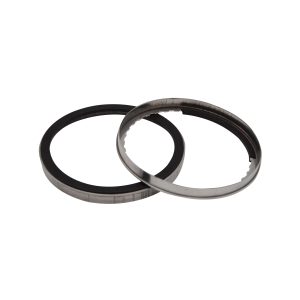
Ferrite Ring Magnet vs Rubber Ferrite Magnet
Ferrite ring magnets and rubber ferrite magnets are the two most common materials used in automotive ABS magnetic rings. While both serve the same sensing purpose, their performance, durability, and long-term reliability differ significantly. The following sections break down their characteristics and provide a clear comparison to help determine which material is better suited for modern automotive applications.
Rubber Ferrite Magnet in Automotive Applications
Rubber ferrite magnets are often used in magnetic sensor rings due to their flexibility and cost-effectiveness. However, they have several limitations:
- Mechanical Weakness: Rubber is prone to deformation when impacted by road debris or stones.
- Temperature Sensitivity: Performance can degrade under extreme hot or cold conditions.
- Lower Magnetic Strength: With a maximum energy product ((BH) max) ≤ 1.4 MGOe, rubber ferrite magnets often cannot meet long-range sensing requirements.
While suitable for low-cost or less demanding applications, rubber ferrite magnets may not provide the durability or sensing precision required in modern automotive systems.
Advantages of Ferrite Ring Magnets
Ferrite ring magnets, especially when combined with PA6 or PA12 binders, overcome the drawbacks of rubber magnets. Key benefits include:
Higher Mechanical Strength: Resistant to deformation and collisions.
Improved Durability: Can withstand harsh automotive environments.
Stronger Magnetic Field: Offers longer sensing distance between the magnetic ring and the induction probe.
These properties make ferrite ring magnets an ideal choice for high-performance ABS systems.
Performance Comparison
| Feature / Property | Ferrite Ring Magnet | Rubber Ferrite Magnet |
| Mechanical Strength | High strength, impact-resistant | Soft & flexible; easily deformed by debris |
| Durability | Excellent; withstands harsh automotive conditions | Poor; prone to wear and cracking |
| Magnetic Strength ((BH) max) | Higher magnetic output | ≤ 1.4 MGOe (much weaker) |
| Sensing Distance | Longer sensing range | Short sensing range |
| Temperature Resistance | Stable in high & low temperatures | Performance decreases under extreme temperatures |
| Installation | Can be injection-molded with metal inserts; direct mounting | May require additional reinforcement |
| Best Use Case | High-performance ABS, long-range sensing | Low-cost, low-demand applications |
Injection-Molded ABS Magnetic Rings
Injection molding with metal inserts produces ABS magnetic rings that combine strength, toughness, and anti-collision capabilities. Key advantages:
- Can be directly installed on the wheel hub without additional reinforcement.
- Stronger surface magnetic field compared to rubber ferrite magnets.
- Enhanced reliability in high and low-temperature environments.
Injection-molded ferrite magnetic rings represent the current standard for durable and precise automotive sensor rings.
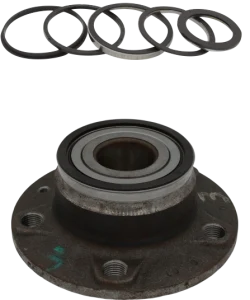
Choosing the Right Magnetic Ring for Your Vehicle
Selecting the proper magnetic ring depends on your vehicle’s performance requirements:
- Rubber ferrite magnets: Suitable for cost-sensitive or low-demand applications.
- Injection-molded ABS magnetic rings : Recommended for high-performance sensors requiring strong magnetic output, long-range sensing, and durability.
Investing in high-quality ferrite or injection-molded rings ensures better ABS performance and longer service life, ultimately contributing to vehicle safety.
Conclusion
From flexible rubber ferrite magnets to durable ferrite ring magnets, and high-strength injection-molded ABS magnetic rings, each material offers unique benefits. Modern automotive applications increasingly favor ferrite-based injection-molded rings for their superior durability, stronger magnetic field, and reliable long-term performance. Choosing the right ABS magnetic ring ensures accurate wheel speed detection and improved vehicle safety.
Choosing the right ABS magnetic ring ensures accurate wheel speed detection and improved vehicle safety. For tailored solutions or inquiries, reach out to our team today to find the perfect magnetic ring for your application.
FAQ:
Q: What does an ABS magnetic ring do?
A: It generates a magnetic field as the wheel rotates, allowing the sensor to detect wheel speed and help the ABS prevent wheel lock during braking.
Q: Why choose ferrite over rubber for ABS rings?
A: Ferrite rings are stronger, more durable, and provide longer sensing distance, while rubber rings are flexible and cheaper but less precise.
Q: Can a damaged ABS ring be repaired?
A: No, once damaged, ABS rings should be replaced to ensure accurate wheel-speed sensing and ABS function.
Q: What happens if an ABS ring is damaged?
A: ABS warning lights may appear, braking performance can decrease, and the ABS or traction control may malfunction.
Q: How to choose the right ABS magnetic ring?
A: Use rubber rings for low-cost, low-demand vehicles; choose ferrite or injection-molded rings for high-performance, durable ABS applications.
Q: What are the key specifications of Chase’s ABS sensing ring?
A: The standard ABS sensing ring is specified as: OD 76.25 mm, ID 67.01 mm, Height 8.02 mm, with surface magnetic field 69.9 mT. For other sizes or magnetic outputs, contact Chase for custom options.