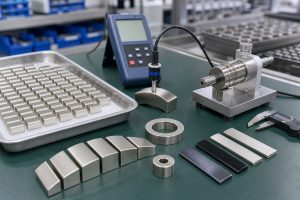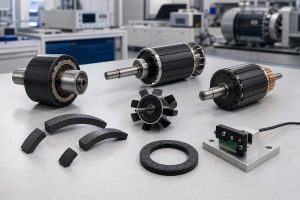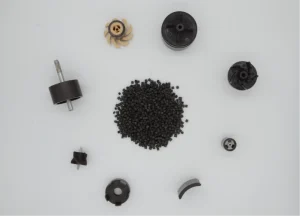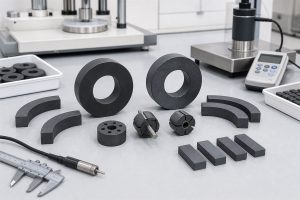


Permanent magnets are critical components used in various applications, from electric motors to consumer electronics. Understanding how these magnets are made can help industries choose the right materials and methods for their specific needs. In this blog, we will explore the manufacturing process of permanent magnets, the methods used, how to choose the right one, and the essential role of quality control.
1. Introduction to Permanent Magnets
Permanent magnets are materials that generate a magnetic field without needing external power. They are typically made from magnetic materials such as rare earth metals like neodymium and samarium-cobalt, as well as alnico alloys and compounds like ferrites. These materials are chosen for their ability to retain magnetization and produce stable magnetic fields. Permanent magnets are widely used in electric motors, magnetic resonance imaging (MRI) machines, sensors, and many other applications where consistent and reliable magnetism is essential.
2. Manufacturing Process of Permanent Magnets
The manufacturing process of permanent magnets involves several key steps, each of which affects the magnet’s final performance and quality.
Raw Material Preparation
The first step in the manufacturing process is the preparation of raw materials. The choice of materials depends on the desired magnetic properties. Rare earth metals such as neodymium, samarium, and cobalt are often used due to their excellent magnetic characteristics. These materials undergo various purification processes to ensure purity before moving to the next stage.
Alloy Melting
In this stage, the purified raw materials are melted at high temperatures to form the desired alloy. The alloy composition is crucial because the properties of the final magnet—such as its strength and resistance to demagnetization—are directly influenced by the alloy used. This process also ensures that the elements are well-mixed to form a homogeneous material.
Shaping
After the alloy is prepared, it is shaped into the desired form. This is typically done through pressing or injection molding. The material is either poured into molds or pressed into the correct shapes (such as cylinders, discs, or blocks) that will be further processed in later stages.
Sintering and Heat Treatment
Sintering is the process of heating the shaped magnet material in a furnace to high temperatures without fully melting it. This helps the particles to bond together, improving the density and strength of the magnet. After sintering, the magnet may undergo heat treatment to further enhance its magnetic properties and ensure stability under varying temperatures and magnetic fields.
Machining and Surface Treatment
Once the magnet is sintered, it is usually machined to the desired dimensions. This includes cutting, grinding, or polishing the magnet to meet precise specifications. Surface treatments, such as coating or oxidation, may be applied to improve the magnet’s durability, corrosion resistance, and overall performance.
Magnetization
The final step is magnetization, where the magnet is exposed to a strong magnetic field to align the magnetic domains within the material. This is what gives the permanent magnet its magnetic properties. The strength and consistency of the magnetization depend on the precision of this process.
3. Manufacturing Methods of Permanent Magnets
There are various methods used to manufacture permanent magnets, each suited to different applications. Understanding these methods can help you choose the right one for your product.
Sintering
Sintering is one of the most common methods used to produce high-performance permanent magnets, especially for materials like neodymium and samarium-cobalt. The process involves heating the powder of the magnetic material and pressing it into a compact shape. Sintering is particularly suitable for magnets that require high strength and precision.

Injection Molding
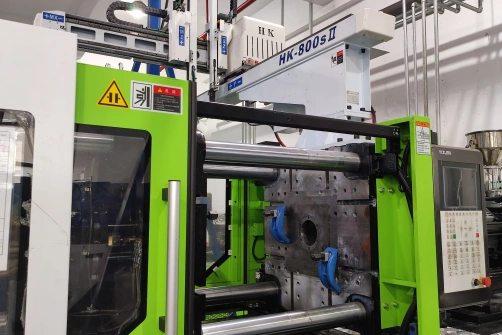
Injection molding is a method used for producing small, precise magnets, especially when a high level of detail is required. In this process, magnetic powders are mixed with binders and injected into molds under high pressure. This method is ideal for high-volume production of complex shapes but is less commonly used for magnets that require exceptionally high magnetic strength.

Compression Bonding
Compression bonding involves compressing magnetic powders mixed with a binding material into a mold. The resulting structure is then bonded and magnetized. This method is often used for producing large magnets and is known for its simplicity and cost-effectiveness.

Hot Pressing
Hot pressing is similar to sintering but involves applying heat and pressure simultaneously to form the magnet. This method is particularly useful for creating high-density magnets with superior strength and durability, making it ideal for applications that demand high-performance magnets.
4. Comparing Manufacturing Methods
Choosing the right manufacturing process depends on the specific application requirements, including the desired magnetic properties, production volume, and material costs.
Related article: Sintered vs. Injection Molded Magnets: A Technical Comparison
| Factor | Sintering | Injection Molding | Compression Bonding | Hot Pressing |
| Magnetic Properties | High magnetic properties, suitable for high-performance magnets. | Moderate magnetic properties, lower than sintering. | Moderate to low magnetic properties, less precise. | High magnetic properties, suitable for demanding applications. |
| Shape Complexity | Best for simple to moderately complex shapes. | Ideal for producing complex shapes with high precision. | Simple shapes, less detailed than injection molding. | Best for simple to moderately complex shapes. |
| Production Volume | Suitable for both small and large-scale production, but with longer processing times. | Best for high-volume, mass production. | Suitable for medium to large-scale production with moderate cost. | Suitable for medium to large-scale production, but more expensive than sintering and injection molding. |
| Precision | High precision in size and magnetization control. | High precision for complex shapes, but may lack fine control of magnetic properties. | Lower precision, not ideal for critical applications. | High precision in density and magnetic properties, suitable for high-performance applications. |
| Durability | High durability, excellent for harsh environments. | Moderate durability, depends on the material and shape. | Moderate durability, less ideal for harsh environments. | High durability, excellent for high-performance and demanding environments. |
| Application | Motors, sensors, automotive parts, high-performance applications. | Consumer electronics, small precision components, large-scale production. | Large-scale production of simple components, low-cost applications. | High-performance motors, aerospace, industrial equipment, and demanding environments. |
5. Quality Control in Permanent Magnet Manufacturing
Quality control is critical throughout the manufacturing process to ensure that the final product meets specifications. Common quality control measures include:
- Magnetic property testing:To ensure the magnet meets the required magnetic strength.
- Dimensional inspection:To ensure the magnet’s size and shape meet precise tolerances.
- Surface testing:To check for any defects in the surface coating or treatment.
High-quality permanent magnets are essential for reliable performance, and effective quality control ensures consistency and reliability.
Conclusion
The manufacturing of permanent magnets is a complex process that requires a deep understanding of materials, methods, and quality control. By selecting the right manufacturing method and ensuring strict quality control, you can produce high-performance magnets suitable for a wide range of applications. Understanding the steps involved and the factors that influence the manufacturing process will allow you to make informed decisions and achieve optimal results for your projects.