

Introduction
DC brushless fans are everywhere—from your computer’s cooling system to industrial ventilation and home appliances. At the heart of every fan lies a BLDC electric motor, which relies on ferrite permanent magnets (or other types of magnets) to generate smooth and efficient rotation.
Choosing the right magnet is not just a technical detail—it directly affects the fan’s speed, torque, efficiency, and overall lifespan. Whether you’re designing a new fan, upgrading an existing one, or just curious about how these components work, understanding the magnet’s role in a DC brushless fan is essential.
1. BLDC Electric Motor in DC Brushless Fans
The BLDC electric motor is the engine behind every DC brushless fan. Unlike brushed motors, BLDC motors have no mechanical brushes, which reduces wear and maintenance while improving efficiency.
Key points about BLDC motors in fans:
- Rotor with Magnets: The rotor is equipped with permanent magnets, which interact with the stator to produce rotation.
- Stator Coils: Stationary windings that generate a magnetic field when powered.
- Electronic Controller: Manages current flow to the coils, ensuring smooth rotation and precise speed control.
The performance of the BLDC electric motor is tightly linked to the type of magnets used—choosing the right magnet can improve efficiency and reduce energy consumption.

2. Understanding the Role of Magnets in DC Brushless Fans
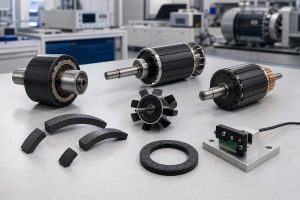
In a BLDC electric motor, the rotor contains permanent magnets, while the stator consists of coils of wire. When electricity flows through the stator coils, it creates a magnetic field that interacts with the rotor’s magnets, producing torque that spins the fan blades.
Without the right magnets, a DC brushless fan cannot reach optimal performance. The magnet’s strength, type, and quality directly influence the fan’s rotational speed, efficiency, and even noise levels.
3. Common Types of Magnets Used in DC Brushless Fans
When it comes to DC brushless fans, the type of magnet used in the BLDC electric motor significantly affects performance, efficiency, and size. The two most common options are ferrite permanent magnets and neodymium magnets. Each type has its own advantages and limitations, which makes understanding their characteristics essential when selecting a magnet for your fan.
Ferrite Permanent Magnets
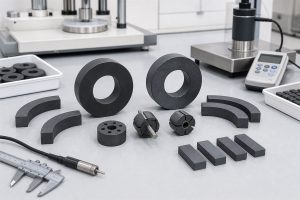
Ferrite permanent magnets, also called ceramic magnets, are made from iron oxide combined with strontium or barium. They are cost-effective, thermally stable, and widely used in standard DC brushless fans.
Neodymium Magnets
Neodymium magnets (NdFeB) are rare-earth magnets composed of neodymium, iron, and boron. They offer high magnetic strength, compact size, and improved fan efficiency, making them ideal for high-performance or space-limited DC brushless fans.
Comparison Table
|
Magnet Type |
Magnetic Strength | Size/Compactness | Temperature Resistance | Cost | Best For |
|
Ferrite Permanent |
Moderate | Larger size needed | High | Low |
PC fans, household appliances, general-purpose BLDC fans |
| Neodymium (NdFeB) | High | Compact | Medium (requires coating) | High |
High-performance fans, space-limited applications, industrial cooling |
4. Magnet Manufacturing Methods: Sintered vs. Injection-Molded
After selecting the magnet material, the next factor that affects motor performance is the manufacturing method. Ferrite and neodymium magnets can both be produced using sintering or injection molding, and the method dramatically influences the magnet’s strength, shape options, mechanical properties, and cost.
Sintered Magnets
Sintering is a high-pressure, high-temperature process that creates dense, rigid magnets with strong magnetic properties. This is the most common method for magnets used in BLDC electric motors.
Injection-Molded Magnets
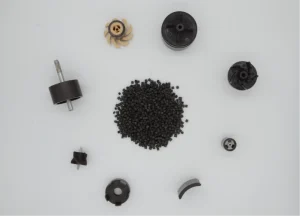
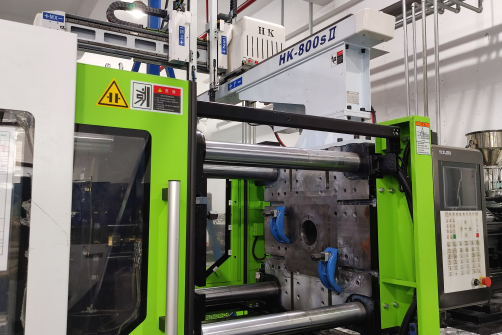
Injection-molded magnets mix magnetic powder with resin, allowing them to be formed into complex shapes with tight tolerances. Though magnetically weaker, they offer great design flexibility and mechanical strength.
Sintered vs. Injection-Molded Magnets
The following table compares sintered and injection-molded magnets, highlighting their strengths, limitations, and ideal applications in DC brushless fans.
|
Manufacturing Method |
Magnetic Strength | Shape Flexibility | Mechanical Strength | Temperature Resistance | Cost | Best For |
| High | Limited | Brittle | High | Medium |
High-performance fans, industrial BLDC motors, continuous-load applications |
|
| Injection-Molded Magnets | Medium | High | Strong | Depends on resin | Higher |
Compact or custom-shaped fans, complex geometries, durable designs |
5. Key Considerations and Practical Tips for Choosing Magnets in DC Brushless Fans
Selecting the right magnet for a DC brushless fan requires balancing performance, size, cost, and environmental demands. Once you understand the magnet materials (ferrite vs. neodymium) and manufacturing methods (sintered vs. injection-molded), you can evaluate which option best fits your fan’s design requirements. Below are the key factors to consider, along with practical recommendations to help you make an informed choice.
Factors to Consider When Choosing a Magnet
- Magnetic Strength: Directly affects fan torque and speed.
- Size and Shape: Must match the fan and motor design.
- Temperature Resistance: Critical for industrial fans or high-heat environments; ferrite magnets perform well here.
- Cost vs Performance: Balance your budget with required efficiency; ferrite magnets offer reliability at lower cost, while neodymium provides higher performance.
Practical Tips and Recommendations
- Check Fan Specs: Confirm the type of BLDC electric motor inside your fan.
- Match Magnet Size to Application: Small fans need stronger, compact magnets; larger fans can use ferrite magnets efficiently.
- Consider Durability: Protective coatings on neodymium magnets extend lifespan.
- Balance Performance and Cost: Ferrite permanent magnets are often sufficient for most applications; neodymium is best for high-efficiency needs.
Conclusion
Magnets, including ferrite permanent magnets, play a vital role in the performance of DC brushless fans powered by BLDC electric motors. Choosing the right magnet improves fan efficiency, extends lifespan, and ensures smooth, reliable operation. By understanding the differences between ferrite and neodymium magnets and considering factors like size, magnetic strength, and temperature resistance, you can make an informed choice that delivers optimal results.
Whether you’re an engineer, a hobbyist, or just curious, selecting the appropriate magnet is key to keeping your DC brushless fan running efficiently for years to come.