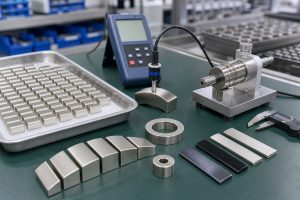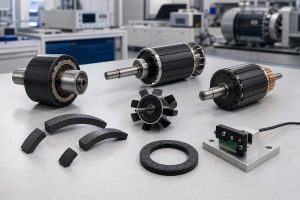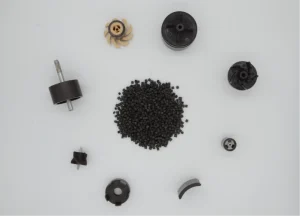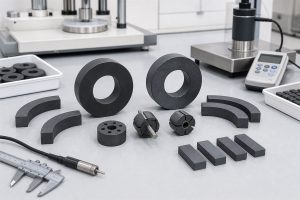


The right rare earth magnet suppliers do more than quote a grade and a price. They help you match the material, process, magnetization, coating, and validation plan to your actual product. They also prove that the same part can be made consistently when volume increases.
Quotes can look nearly identical while the real capabilities differ. One company may control every key process. Another may outsource most of the work. Here is how to tell them apart.
What Should Rare Earth Magnet Suppliers Provide?
A capable supplier should turn your requirements into a stable magnetic solution. That includes material selection, simulation, prototype support, production controls, and final inspection. It should also explain risks clearly.
First, define what the magnet must do. Is the target holding force, motor torque, back EMF, sensor output, or field at a fixed air gap? Add temperature, corrosion exposure, space, volume, and lifetime.
How to Compare Rare Earth Magnet Suppliers
1. Confirm Material and Process Fit
“Rare earth magnet” is not one material. Sintered NdFeB provides high output. Bonded NdFeB supports thin walls, complex shapes, and multipole rings. SmCo suits high heat and stability. Injection-molded SmFeN can suit compact sensor and motor parts.
Ask each supplier why it recommends a certain family and grade. Then ask what it would choose if the temperature, air gap, or volume changed. A useful answer should connect magnetic performance with tooling, assembly, and cost.
2. Verify Real Manufacturing Capability
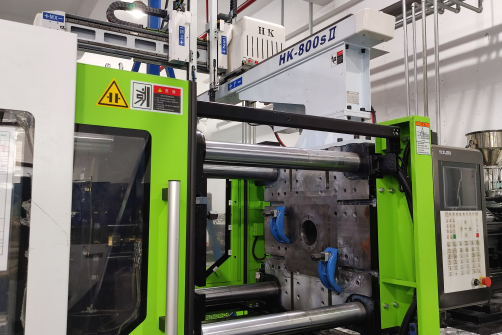
Find out which operations happen in-house. Important steps may include compound preparation, pressing or molding, machining, coating, insert molding, magnetizing, assembly, and magnetic inspection. Outsourcing is not automatically bad. Hidden outsourcing is. It can weaken lead-time control, traceability, and change management.
During an audit, follow one part from incoming material to shipment. Look for calibrated equipment, clear instructions, lot identification, and approved subcontractors. Ask to see similar parts.

3. Review Quality Systems and Traceability
ISO 9001 is a useful baseline, but a certificate is only the start. Verify its scope, issuer, location, and expiry. The ISO 9001 overview emphasizes controlled operations, measurement, evaluation, and improvement.
Automotive programs may need IATF 16949, PPAP, control plans, process capability data, and customer-specific requirements. Medical, aerospace, or safety-related products can need different controls. Match the qualification depth to your risk. Also confirm that material batches, process settings, coating lots, inspection results, and shipment records can be traced.
4. Test Performance in the Assembly
A Br or BHmax value does not guarantee product performance. Shape, pole pattern, air gap, steel, temperature, and assembly tolerance all affect the field. Test what your product actually uses.
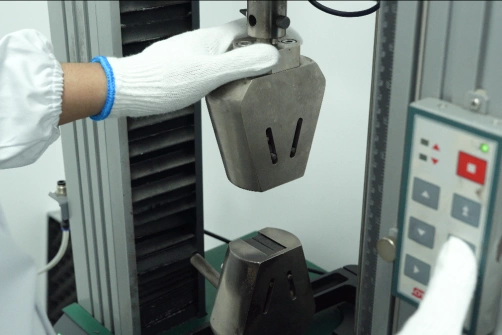
Useful methods include flux measurement, Helmholtz coils, gaussmeters, flux-density mapping, pull-force fixtures, and motor or sensor testing. For multipole rings, review pole count, pole position, amplitude variation, and harmonic content. For rotors, validate the fully assembled part when possible. Chase describes this approach in its magnet quality control process.
5. Validate Coating and Retention
Many failures happen around the magnet. A strong NdFeB grade can still fail through coating, adhesive, insert, or sleeve problems. Share all environmental and mechanical conditions.
Ask for an environmental test plan and clear acceptance limits. Samples should use production-intent material, coating, adhesive, and tooling. A generic salt-spray report from an unrelated grade is not enough.
6. Check Capacity and Change Control
Prototype speed is useful. Stable volume production matters more. Review normal capacity, surge capacity, tooling redundancy, maintenance, and lead times. Ask about equipment downtime.
The supplier should notify you before changing materials, locations, tooling, subcontractors, processes, coatings, or inspection. Agree on the approval path before ordering.
7. Review Supply Chain Resilience
Rare earth supply is concentrated, so origin matters. The USGS Mineral Commodity Summaries 2026 reports that China supplied 71% of U.S. rare-earth compounds and metal imports during 2021–2024. That makes visibility important.
Ask where alloy or powder comes from, whether approved alternatives exist, and how price changes are handled. For critical programs, consider safety stock, a second qualified source, or dual tooling. Review export controls and documentation early. Our guide to rare earth magnet supply risks covers practical mitigation steps.
8. Compare Total Landed Cost
The lowest unit price can become expensive after sorting, rejects, premium freight, assembly labor, coating failures, or redesign. Compare tooling, samples, inspection, packaging, freight, tariffs, payment terms, and warranty support. Clarify who owns the mold, magnetizing fixture, gauges, and design files.
Also check minimum order quantities, price-adjustment rules, surcharges, and lead-time commitments. A transparent quote is easier to manage.
How to Qualify a Magnet Supplier
Send a Technical RFQ
Include the drawing, 3D model, field target, magnetization, temperature, environment, volume, and validation needs. Mark critical characteristics. If the design is open, invite alternatives.
Build Production-Intent Samples
First samples show whether the concept works. Production-intent samples show whether the process can repeat it. Use the intended material, tooling, coating, magnetization, and assembly.
Audit Before Full Production
Audit the actual production site before a critical launch. Close open issues with owners and dates. Then approve samples, inspection standards, packaging, and change controls in writing. For automotive work, align PPAP and customer-specific requirements early; the IATF customer requirements page shows why one generic checklist may not cover every OEM.
Why Work With Chase Technology?
Chase Technology has focused on magnetic materials and components since 2011. Our capabilities include injection-molded magnets, compression-bonded NdFeB, sintered magnets, custom magnetization, tooling, magnetic simulation, testing, and finished assemblies. Multiple production bases support projects from early DFM through volume manufacturing.
More importantly, our team looks at the complete application. We can review the magnet, insert, shaft, air gap, sensor, adhesive, and validation method together. Explore our magnet products and manufacturing processes or our research and development capabilities.
If you have a project in mind, we’d like to hear about it. Contact us to discuss your requirements.
FAQs
What Certifications Should Suppliers Have?
ISO 9001 is a common baseline. Automotive projects may require IATF 16949 and PPAP. Medical or aerospace work can need additional controls. Always verify the certificate scope, production site, issuing body, and validity.
Should I Choose NdFeB or SmCo?
Choose from the application requirements. NdFeB usually provides higher magnetic output per volume. SmCo often offers better high-temperature stability and corrosion resistance. Geometry, coating, magnetic circuit, and cost also matter.
How Do I Compare Magnet Quotes?
Normalize material grade, tolerances, coating, magnetization, testing, packaging, tooling, freight, tariffs, and payment terms. Compare total landed cost and technical risk, not unit price alone.
Why Is Traceability Important?
Traceability connects a shipped magnet to its raw material, process settings, coating, magnetization, and inspection results. It speeds root-cause analysis and limits the scope of a recall or containment action.
When Should I Dual Source?
Consider dual sourcing when a magnet is business-critical, uses constrained materials, has long tooling lead times, or lacks a quick redesign path. Qualify both sources before a disruption occurs.