

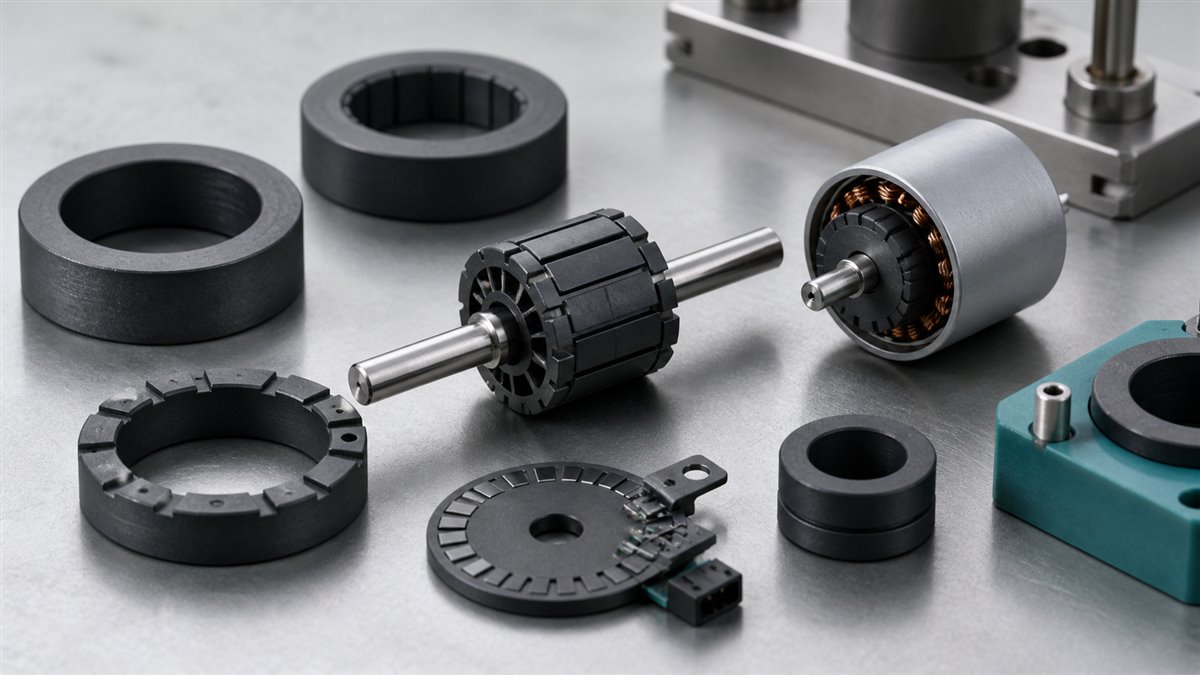
Struggling to make off-the-shelf magnets work in your design? Custom shaped neodymium magnets are built for that exact challenge.
They give you the precise magnetic field and fit you need when standard shapes fall short.
You will find them in action across EV sensors, robotics, medical devices, magnetic couplings, and modern gadgets. When every millimeter and gauss matters, custom geometry gets the job done right.
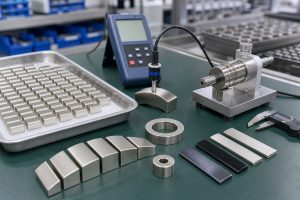
The important word is custom. These parts are designed around an air gap, rotor, housing, shaft, circuit board, or moving mechanism. Their value comes from matching the magnetic circuit and mechanical package, not from using an unusual outline for its own sake.
Why OEMs Need Custom Neodymium Magnet Shapes
Control the Magnetic Field
Magnet shape changes the magnetic circuit. An arc can follow a rotor radius, a tapered pole can concentrate flux, and a keyed ring can hold a pole pattern at a known angle. Engineers may optimize torque, sensor linearity, holding force, field uniformity, or leakage. Magnetic simulation helps compare candidate geometries before hard tooling; Chase Technology uses magnetic-field and motor simulation to evaluate field distribution and predicted surface gauss.
Fit More Function Into Less Space
A custom outline can wrap around a shaft, clear a connector, locate against a housing, or combine several small magnets into one part. It may also support insert molding or a molded carrier that sets the magnet position. The benefit is often a simpler assembly and controlled orientation, although the tooling, tolerances, coating, and inspection method can raise development cost.
6 Key Applications of Custom Shaped Neodymium Magnets
Common applications include arc segments in permanent-magnet motors, keyed or multipole rings in encoders, contoured targets in position sensors, thin profiles in consumer electronics, and integrated magnetic rotors in pumps and actuators. The shape is selected to control flux, reduce unused space, simplify assembly, or meet a specific motion requirement.
Electric Motors and Generators
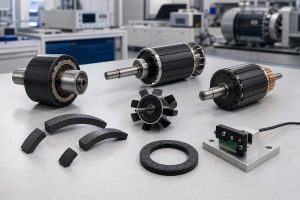
Motor designers use arc, bread-loaf, skewed, stepped, and segmented NdFeB magnets to follow rotor geometry and shape the air-gap field. Applications range from EV traction and auxiliary motors to servo motors, drones, power tools, compressors, and compact BLDC drives. The U.S. Department of Energy notes that almost all hybrid and plug-in electric vehicles use rare-earth permanent magnets in their traction motors. In an internal permanent-magnet rotor, geometry also affects retention, leakage flux, cogging torque, and the iron bridges around each magnet.
For a closer look at motor-specific tradeoffs, see our comparison of bonded ring and sintered arc rotor magnets.
Automotive Sensors and Actuators
Vehicles contain magnetic targets for wheel speed, steering angle, gear position, throttle position, seat motors, sunroofs, pumps, valves, and headlamp adjustment. A D-shaped, notched, keyed, or overmolded magnet can establish a known orientation and prevent assembly errors. In rotary sensing, the pole pattern and the magnet-to-IC air gap matter as much as the outside dimensions. A custom profile may also clear a shaft, bearing, fastener, or connector that occupies the same small housing.
Our guide to custom magnets for position and angle sensors explains how field balance, mounting, and environmental conditions enter the design.
Robotics and Industrial Automation
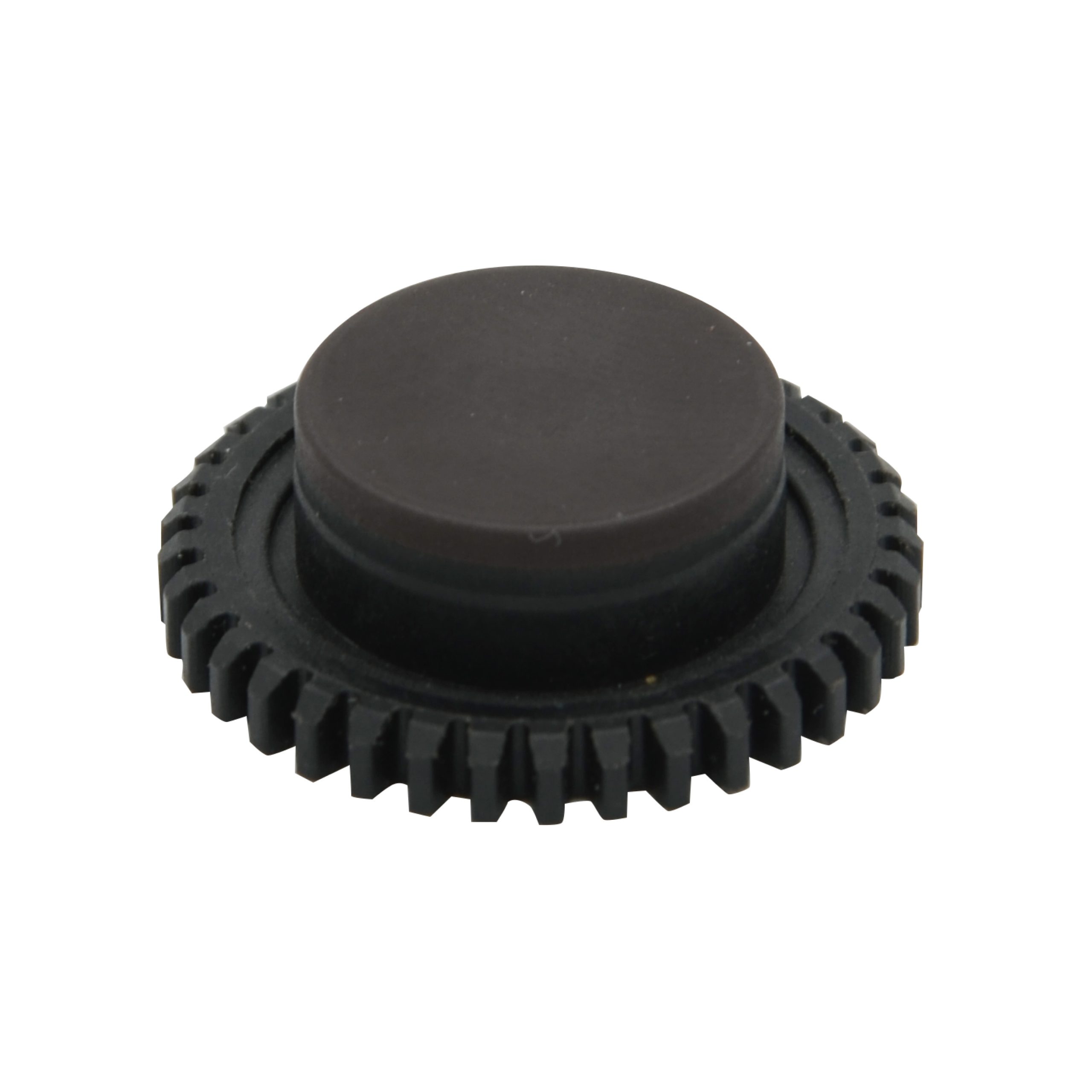
Robotic joints, servo feedback systems, grippers, linear actuators, safety switches, and machine encoders often have limited installation space. Thin arcs, partial rings, magnet carriers, or indexed targets can fit around gears and bearings while producing the required field at the sensor. Custom geometry can also reduce the number of separate magnets, fixtures, and alignment steps in a high-volume assembly.
Medical and Laboratory Equipment
Custom NdFeB parts appear in miniature pumps, sample-handling devices, diagnostic actuators, optical stages, dental equipment, and laboratory instruments. Designers may need a curved, slotted, or very thin magnet to create force within a sealed or cleanable enclosure. Material, coating, adhesive, and corrosion validation must match the actual environment. NdFeB is not automatically suitable for implants or high-temperature sterilization, so application-specific compliance and material review are necessary.
Consumer Electronics and Smart Devices
Earbuds, speakers, camera modules, wearables, charging accessories, haptic devices, smart-home products, and compact latches use strong magnets in crowded packages. A crescent, tapered, stepped, or asymmetric piece can leave room for a battery, coil, fastener, or antenna. The U.S. Geological Survey links high-strength rare-earth magnets with the miniaturization of electrical and electronic components, including communications equipment, computers, appliances, and audio-video products.
Energy and Industrial Magnetic Assemblies
Wind generators, magnetic couplings, pumps, separators, holding fixtures, and instrumentation may use sectors, wedges, contoured blocks, or arrays. In a coupling, matching arcs can transfer torque across a sealed wall. In a fixture, a pocketed or countersunk shape can place the working pole close to the target while protecting the brittle magnet. For exposed or corrosive service, the supplier must evaluate coating coverage at edges, holes, and machined features.
Sintered vs Bonded: Which Custom Process Fits Your Application?
Machined Sintered NdFeB Shapes
Sintered NdFeB offers high magnetic output, making it useful for compact motors and high-force assemblies. The blank is pressed and sintered, then ground, sliced, drilled, or wire-cut before coating and magnetization. Complex features can increase material waste and edge damage because sintered NdFeB is hard and brittle. Very thin walls, sharp internal corners, and deep holes may be impractical or expensive.
Molded Bonded NdFeB Shapes
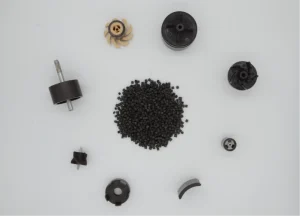
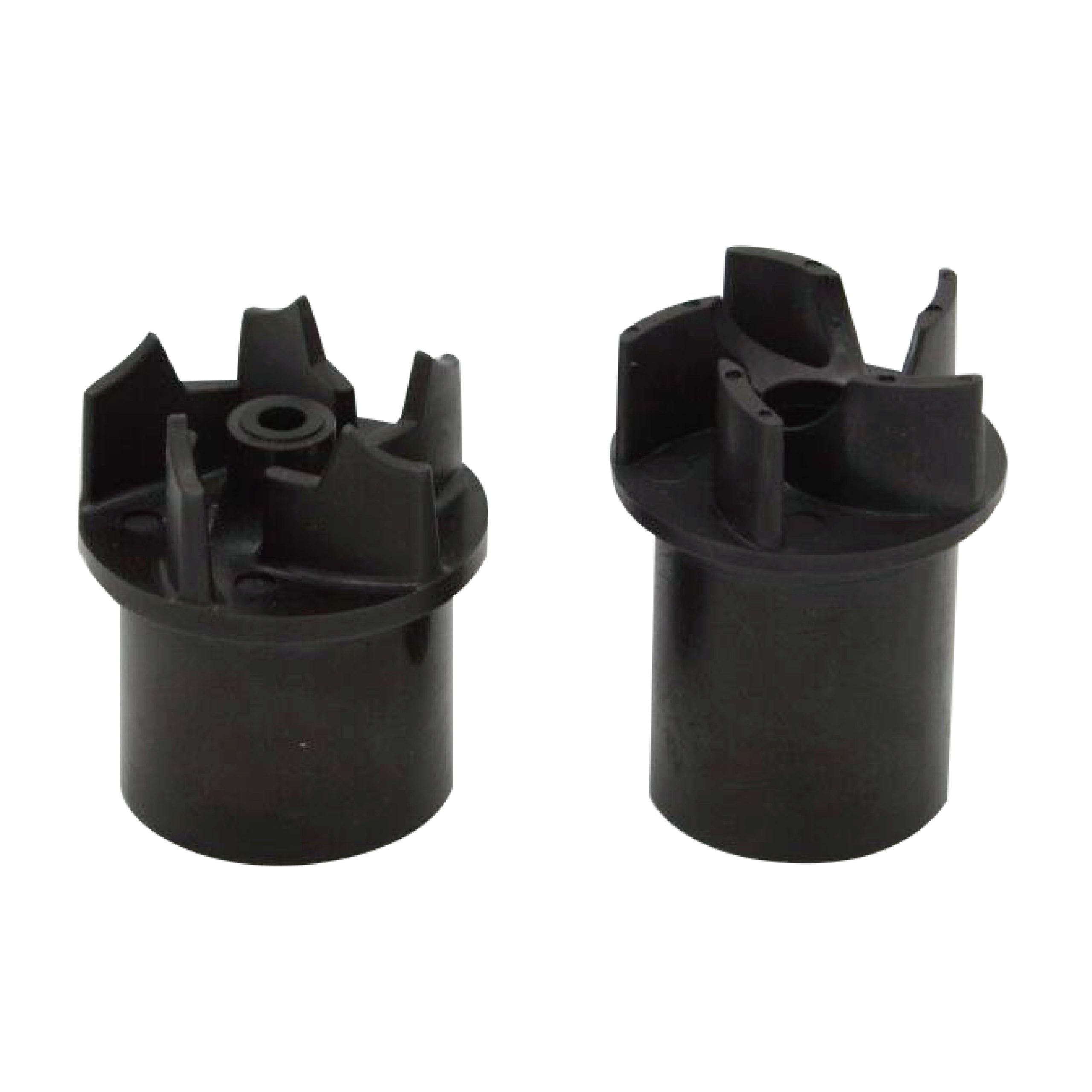
Injection-molded or compression-molded NdFeB combines magnetic powder with a polymer binder. Magnetic output is lower than comparable sintered material, but molding can produce near-net shapes, thin features, inserts, and multipole rings with good dimensional repeatability. It can be the better system-level choice when integration saves machining or assembly steps. Compare the tradeoffs in our plastic bonded versus sintered neodymium guide.
Common Custom Neodymium Magnet Geometries
| Custom geometry | Typical use | Design reason |
|---|---|---|
| Arc or segment | Motors, generators, couplings | Follows a rotor or cylindrical air gap |
| Keyed or notched ring | Encoders, angle sensors | Controls orientation and pole indexing |
| Stepped or tapered block | Actuators, compact electronics | Fits around adjacent components |
| Countersunk or pocketed part | Fixtures, closures, assemblies | Provides mechanical location or fastener clearance |
| Overmolded magnetic target | Automotive and industrial sensors | Combines the magnet, insert, and locating features |
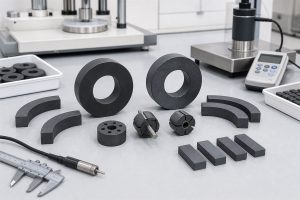
For a broader overview of standard forms, read different neodymium magnet shapes and their applications. That guide covers discs, cylinders, blocks, rings, and spheres; this article focuses on application-driven, non-standard geometry.
Discuss Your Custom Neodymium Magnet Application
Chase Technology can review geometry, material, magnetization, simulation, tooling, and validation for custom shaped neodymium magnets and magnetic assemblies. Have a custom project in mind? Contact us now to kick off your manufacturing review.
FAQs
Can Neodymium Magnets Have Any Shape?
No. Brittle sintered NdFeB, machining access, coating coverage, magnetization fixtures, tolerances, and cost limit feasible geometry. Bonded molding supports more complex shapes but provides lower magnetic output.
Why Use Arc Neodymium Magnets?
Arc magnets follow cylindrical rotors and air gaps, making them useful in motors, generators, and magnetic couplings. Their angle, thickness, magnetization, and segmentation influence field distribution and assembly.
Are Custom Shapes More Expensive?
Usually, due to engineering, tooling, machining, inspection, and lower initial volume. The total assembly cost may still fall if one custom part replaces multiple magnets, carriers, or alignment steps.
Which Coating Is Best for Irregular NdFeB Magnets?
The answer depends on humidity, fluids, temperature, handling, and bonding. Nickel-based, epoxy, zinc, and other systems have different edge coverage and adhesion, so validate the coating on the finished geometry.