

Why are rare earth permanent magnets such a big deal in modern manufacturing? Simple: they give you maximum magnetic force with minimal size and weight.
They are the silent drivers inside electric cars, industrial robots, power generators, and medical devices. If a product needs to run quieter, last longer, or save space, chances are there is a high-performance magnet inside. Let’s look at the key applications where these magnets make all the difference.
What Are Rare Earth Permanent Magnets?
Rare earth permanent magnets are high-strength magnets made with rare earth elements. The two main families are neodymium-iron-boron (NdFeB) and samarium-cobalt (SmCo). Both keep their magnetic field without electrical power. That makes them different from electromagnets, which need current to work.
Neodymium Iron Boron Magnets
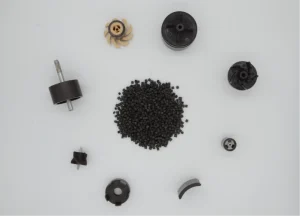
NdFeB offers the highest magnetic strength among widely used commercial permanent magnets. It works well when space and weight are tight. Common forms include sintered blocks and arcs, bonded rings, tiny precision parts, and complete rotor assemblies. Coating and grade selection matter because NdFeB can corrode and lose performance at excessive temperature.
Samarium Cobalt Magnets
SmCo is usually chosen for heat, corrosion resistance, and magnetic stability. It is common in aerospace, defense, high-speed motors, and instruments. It costs more and can be brittle, but it performs well in environments that push standard NdFeB grades too far.
Why Are Rare Earth Permanent Magnets Used?
The simple answer is power density. A small rare earth magnet can create a useful field without a large magnetic volume. That helps engineers reduce motor size, cut rotor weight, improve torque, or fit an actuator into a thin product.
They also support efficient energy conversion. In a motor, the magnetic field turns electrical energy into motion. In a generator, the same basic interaction turns motion into electricity. The U.S. Department of Energy notes that permanent magnet motors can offer high power density and broad operating efficiency in electric-drive systems. Its electric motor overview also explains why rare earth use remains an important design topic.
Applications of Rare Earth Permanent Magnets
1. Electric Vehicles and Automotive Systems
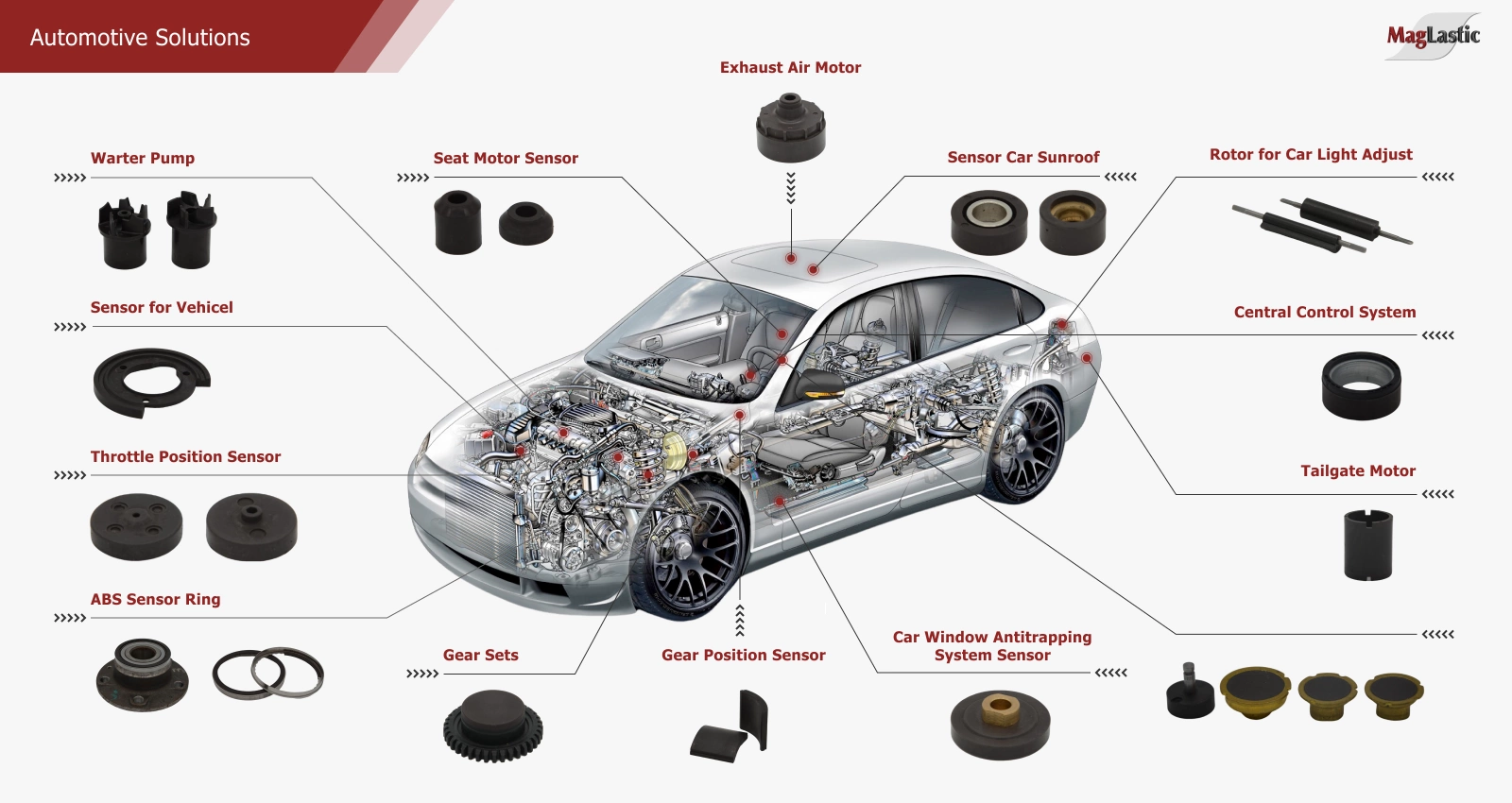
EV and hybrid traction motors are one of the best-known uses. High-strength NdFeB helps deliver torque from a compact rotor. Rare earth magnets also appear in electric power steering, pumps, compressors, braking systems, seat motors, and many actuators. They can reduce weight while maintaining output. See our guide to magnets in automotive components for more examples.
2. Wind Turbines and Generators
Permanent magnet generators use the rotating magnetic field to produce electricity. Direct-drive and some geared wind turbines use NdFeB because it supports high efficiency and reduces the need for electrical excitation. The exact magnet mass depends on generator architecture. Large machines also make supply security, corrosion protection, and recycling part of the design conversation.
3. Industrial Motors and Robotics
Servo motors, BLDC motors, linear motors, cobots, and factory actuators need quick response and precise control. Rare earth permanent magnets provide a strong, repeatable field without adding rotor current. This supports compact motors with good torque and low inertia. Our electric motor magnet applications guide covers rotors, pumps, fans, tools, and servo feedback.
4. Consumer Electronics and Audio
Small NdFeB magnets are common in speakers, headphones, microphones, camera actuators, vibration motors, and hard disk drives. Their field strength lets designers shrink moving parts while keeping useful force. That matters when every millimeter counts. The magnet may be tiny, but its shape, coating, magnetization direction, and adhesive joint still need careful control.
5. Home Appliances and HVAC
Air conditioner compressors, washing machines, vacuum cleaners, refrigerators, fans, and pumps can all use permanent magnet motors. The goal is usually straightforward: improve efficiency, reduce size, and control speed more precisely.

6. Medical and Laboratory Equipment
Rare earth magnets appear in selected MRI systems, surgical tools, pumps, couplings, laboratory separators, motion-control devices, and compact medical actuators. The requirements can be strict. Materials may need low particle release, controlled coatings, traceability, clean assembly, and stable performance. SmCo can be useful when temperature stability matters more than maximum room-temperature strength.
7. Aerospace and Defense Equipment
Aircraft actuators, satellite mechanisms, guidance systems, sensors, radar equipment, and high-speed motors often work under heat, vibration, vacuum, or corrosive exposure. SmCo is a familiar choice in these conditions. Its magnetic stability can be more valuable than the higher energy product of NdFeB. Documentation and controlled North American or European supply may also influence selection.
8. Sensors, Actuators, and Pumps
Magnets provide a contactless target for Hall, AMR, GMR, and TMR sensors. They help measure speed, angle, position, level, or flow. In pumps and sealed couplings, magnetic force transfers torque through a barrier without a direct shaft seal. Custom pole patterns and tight air-gap control are often more important than maximum magnet strength. See our position and angle sensor magnet guide.
Rare Earth Permanent Magnet Applications Compared
| Application | What the magnet does | Common choice | Main design concern |
|---|---|---|---|
| EV motor | Creates rotor field and torque | High-temperature NdFeB | Demagnetization and retention |
| Wind generator | Converts rotation into electricity | NdFeB | Corrosion and supply risk |
| Robot or servo | Provides compact, responsive motion | NdFeB | Torque ripple and assembly |
| Electronics | Creates force in a tiny package | NdFeB | Coating and dimensional tolerance |
| Aerospace actuator | Drives motion under harsh conditions | SmCo or high-temperature NdFeB | Heat, shock, and traceability |
| Position sensor | Provides a measurable field target | NdFeB, SmCo, or bonded NdFeB | Field pattern and air gap |
How to Choose NdFeB or SmCo
Choose NdFeB when you need the most magnetic output from limited space and the temperature is manageable. Choose SmCo when high heat, corrosion resistance, or long-term magnetic stability has greater value. Do not choose by material name alone. Grade, geometry, coating, and the magnetic circuit all change the result.
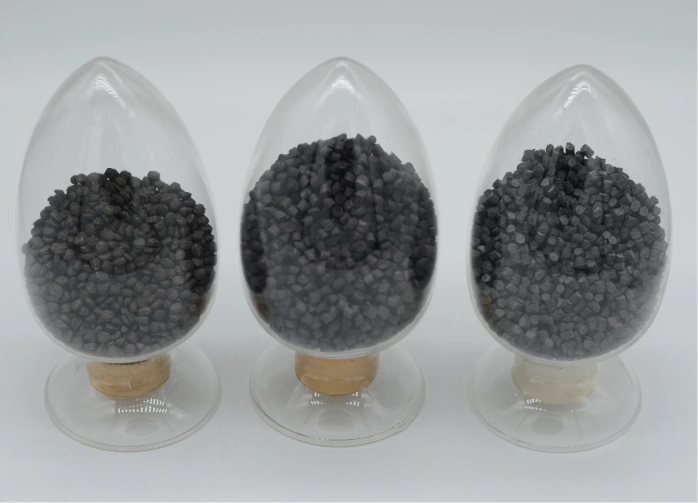
The manufacturing route matters too. Sintered magnets provide high magnetic output. Bonded magnets allow thin walls, integrated hubs, and complex multipole patterns. Our bonded versus sintered NdFeB comparison explains where each route makes sense.
Discuss Your Rare Earth Magnet Application
Need custom magnet engineering support for your next project? We cover the whole process, including simulation, insert molding, specialized coatings, and full magnetic assemblies.
Share your target specs and project volume with Chase Technology, and our engineers will help you get your design built right.
FAQs
What Products Use Rare Earth Magnets?
Common products include EV motors, wind generators, robots, pumps, speakers, headphones, hard drives, appliance motors, medical devices, sensors, aircraft actuators, and industrial automation equipment.
Why Are They So Powerful?
NdFeB and SmCo alloys have strong magnetic anisotropy and high resistance to demagnetization. Their crystal structures support a strong, stable field in a relatively small volume.
Do Rare Earth Magnets Need Power?
No. They are permanent magnets and maintain a magnetic field without electrical current. The motor, sensor, or actuator around them may still need electrical power.
Is SmCo Better Than NdFeB?
It depends. SmCo is often better for high heat, corrosion resistance, and stability. NdFeB usually offers greater magnetic strength per unit volume at a lower material cost.
Can Rare Earth Magnets Be Recycled?
Yes. Magnets can be recovered and processed through direct recycling or separated back into useful materials. Commercial feasibility depends on collection, coating, contamination, magnet size, and recycling volume.