

Neodymium magnets, also known as NdFeB magnets, are the strongest commercially available permanent magnets and are widely used across industrial, automotive, energy, and electronics sectors. From high-performance electric motors to precision sensors, these magnets play a critical role in modern manufacturing.
However, not all neodymium magnets are the same. Their magnetic performance, mechanical strength, cost, and application suitability are largely determined by how they are manufactured. Understanding the types of neodymium magnets by manufacturing process is essential for engineers, designers, and procurement teams when selecting the right magnet for a specific application.
This article provides a systematic overview of the main types of neodymium magnets based on manufacturing process, explaining their characteristics, advantages, limitations, and typical applications.
Why Manufacturing Process Matters for Neodymium Magnets
The manufacturing process plays a decisive role in determining the performance and application boundaries of neodymium magnets, mainly through its impact on internal microstructure and production characteristics.
From a material and performance perspective, the manufacturing process affects:
- Grain alignment, which directly influences magnetic anisotropy and overall magnetic strength
- Material density, affecting remanence (Br) and maximum energy product ((BH)max)
- Bonding method, determining whether the magnet is sintered, bonded, or hot-deformed
- Key magnetic parameters, including coercivity (Hcj), (BH)max, and temperature stability
From an industrial and production perspective, the manufacturing process determines:
- Production cost and scalability for mass manufacturing
- Dimensional accuracy and shape flexibility, especially for complex geometries
- Mechanical strength and durability during machining and assembly
- Corrosion resistance and the need for surface coatings
Because these factors directly affect both performance and cost, classifying neodymium magnets by manufacturing process remains the most practical and widely accepted approach in engineering, design, and procurement environments.
Related article: Sintered vs. Injection Molded Magnets
Sintered Neodymium Magnets
Manufacturing Process of Sintered NdFeB Magnets
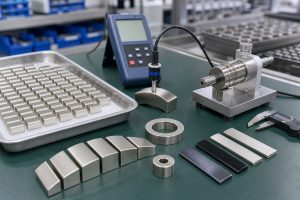
Sintered neodymium magnets are produced through a powder metallurgy process. Raw materials are vacuum-melted into alloy ingots, crushed into fine powder, and then aligned in a strong magnetic field before being pressed into shape. The compacted parts are sintered at high temperature, followed by heat treatment and precision machining. Due to their sensitivity to corrosion, surface coatings such as nickel, zinc, or epoxy are typically applied.

Key Characteristics of Sintered Neodymium Magnets
- Highest magnetic performance among NdFeB magnet types, making sintered neodymium magnets the preferred choice for high-demand industrial applications
- Strong magnetic anisotropy, with magnetic properties maximized in a specific alignment direction
- Exceptional magnetic strength and high energy density, enabling compact designs with maximum output
- Relatively brittle mechanical structure, requiring careful handling during machining, assembly, and installation
- Dependence on protective surface coatings (such as nickel, zinc, or epoxy) to ensure long-term corrosion resistance
- Sensitivity to humid or aggressive operating environments if proper surface treatment is not applied
Typical Applications of Sintered Neodymium Magnets
Thanks to their superior performance, sintered neodymium magnets are widely used in demanding industrial applications, including:
- Servo motors and brushless DC motors
- Electric vehicle (EV) drive systems
- Wind turbine generators
- Robotics and industrial automation equipment
Sintered NdFeB magnets account for the majority of global neodymium magnet production and remain the preferred choice where maximum magnetic strength is required.
Bonded Neodymium Magnets
Manufacturing Process of Bonded NdFeB Magnets
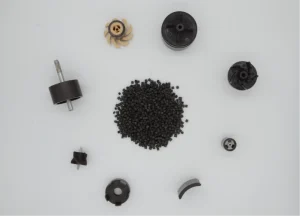
Bonded neodymium magnets are manufactured by mixing NdFeB magnetic powder with a polymer binder, such as epoxy resin or nylon. The mixture is then shaped using compression molding or injection molding techniques. Unlike sintered magnets, bonded magnets are formed at much lower temperatures and do not require a sintering step.
Types of Bonded Neodymium Magnets
There are two main types of bonded neodymium magnets:
- Injection molded bonded NdFeB magnets, ideal for high-volume production of complex shapes
- Compression bonded NdFeB magnets, offering slightly higher magnetic performance and density
Both types fall under the broader category of bonded NdFeB magnet solutions.


Key Characteristics of Bonded NdFeB Magnets
- Lower magnetic strength compared with sintered neodymium magnets, making bonded NdFeB magnets less suitable for ultra-high-performance applications
- Outstanding design flexibility, allowing magnets to be molded into complex geometries with tight dimensional tolerances
- Minimal or no secondary machining required, which helps reduce production time and overall manufacturing cost
- Improved corrosion resistance, resulting from the polymer binder used in bonded magnet production
- No additional surface coating typically required, simplifying processing and improving long-term environmental stability
Typical Applications of Bonded Neodymium Magnets
Bonded neodymium magnets are commonly used in applications where shape complexity, dimensional accuracy, and cost efficiency are more important than maximum magnetic force, such as:
- Automotive sensors and actuators
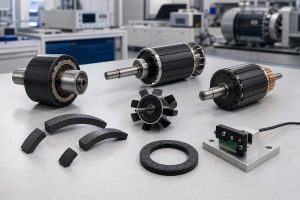
- Small electric motors and fans
- Office equipment
- Consumer and industrial electronics
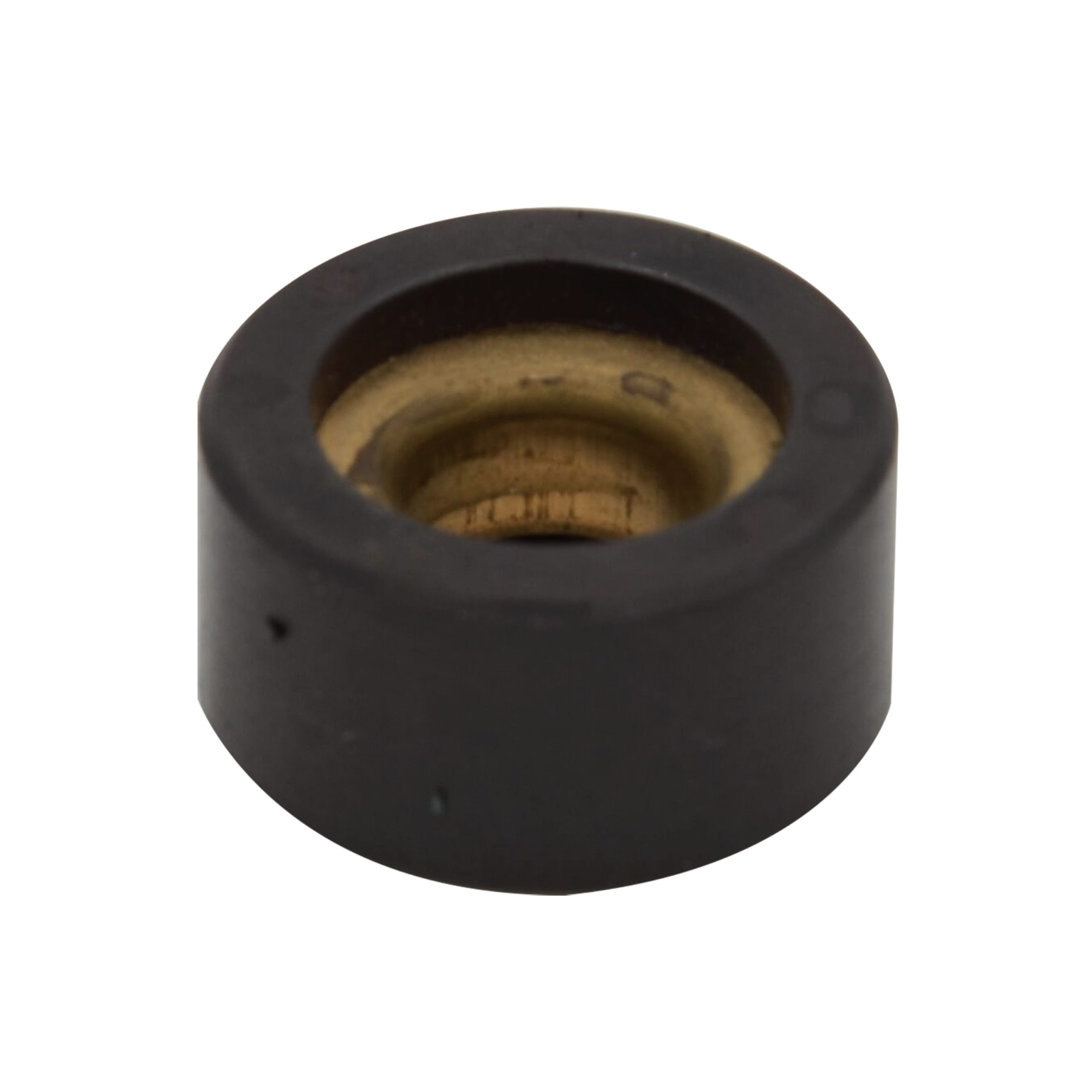
Hot-Pressed and Hot-Deformed Neodymium Magnets
Manufacturing Process of Hot-Pressed and Hot-Deformed NdFeB Magnets
Hot-pressed and hot-deformed neodymium magnets are produced from rapidly solidified NdFeB powder. The powder is first hot-pressed into a fully dense compact and then hot-deformed to induce grain alignment. This process creates a highly refined microstructure with excellent density and directional magnetic properties.
Key Characteristics of Hot-Deformed NdFeB Magnets
- High magnetic performance combined with improved mechanical strength, offering clear advantages over conventional sintered neodymium magnets
- Fine and uniform grain structure, which enhances toughness and structural integrity
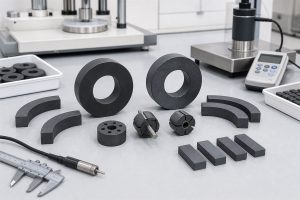
- Well suited for thin-walled and ring-shaped components, especially in applications with demanding mechanical requirements
- Relatively high production cost, due to specialized processing and equipment requirements
- A unique balance between performance and long-term reliability, making hot-deformed NdFeB magnets ideal for high-end and precision applications
Typical Applications of Hot-Deformed NdFeB Magnets
Hot-deformed neodymium magnets are typically used in specialized, high-end applications, including:
- High-speed electric motors
- Aerospace and defense systems
- Precision servo and spindle motors
Comparison of Neodymium Magnet Types by Manufacturing Process
| Manufacturing Process | Magnet Type | Magnetic Performance | Mechanical Properties | Shape Flexibility | Cost Level | Typical Applications |
| Sintering | Sintered Neodymium Magnet | Very high (highest Br and (BH)max) | Brittle, moderate strength | Moderate (machining required) | Medium to High | Industrial motors, EV motors, wind turbines, automation systems |
| Bonding (Compression / Injection) | Bonded NdFeB Magnet | Low to medium | Good toughness | Excellent (complex shapes, near-net shaping) | Low to Medium | Sensors, small motors, automotive components, consumer electronics |
| Hot Pressing / Hot Deformation | Hot-Deformed NdFeB Magnet | High | Superior toughness and density | Good (thin rings, thin-walled parts) | High | High-speed motors, aerospace, precision servo systems |
Related article: How Permanent Magnets Are Manufactured
Conclusion
Classifying neodymium magnets by manufacturing process provides a clear and practical framework for understanding their performance and application differences. Whether it is a high-strength sintered neodymium magnet, a cost-effective bonded NdFeB magnet, or a specialized hot-deformed solution, each type serves a distinct role in modern manufacturing.
By selecting the right magnet based on manufacturing process and application requirements, manufacturers can improve system efficiency, reduce failure risk, and achieve better overall product performance.
If you’re looking to optimize your product designs with the right neodymium magnet, contact us today to discuss your application requirements and get expert guidance on the ideal magnet solution.