

The evolution of electric motors has led to a significant shift from traditional brushed motors to brushless DC motors (BLDC). Unlike their brushed counterparts, BLDC motors offer higher efficiency, longer lifespans, and reduced maintenance costs, making them the preferred choice in industries ranging from automotive to renewable energy. At the core of these performance improvements lies a crucial component: permanent magnets. The material and design of these magnets directly determine the efficiency, size, and stability of BLDC motors.
This article will break down the critical role that permanent magnets play in brushless DC motors, focusing on how they impact motor and rotor performance.
1. What Makes Brushless DC Motors Different?
Brushless DC motors (BLDC) stand apart from traditional brushed motors and induction motors in several key ways.
No Brushes or Commutators
- No brushes or commutators:Unlike traditional motors, BLDC motors don’t require brushes or commutators.
- Electronic controllers:Current flow is managed by electronic controllers instead of mechanical parts, reducing wear and tear caused by friction.
- Improved efficiency:The elimination of brushes boosts efficiency and extends the motor’s lifespan.
Permanent Magnet Rotor
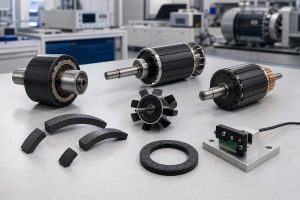
- Permanent magnets replace windings: BLDC motors use permanent magnets in the rotor, unlike traditional brushed motors that rely on electromagnetic windings.
- Stable magnetic field: The rotor’s permanent magnets create a stable magnetic field that interacts with the stator’s electromagnetic field.
- Enhanced torque generation:This interaction generates torque, making the motor more efficient.

2. The Role of Permanent Magnets in Brushless DC Motors
Permanent magnets play an essential role in driving the efficiency of BLDC motors.
- Continuous Magnetic Field:Permanent magnets generate a continuous magnetic field that interacts with the stator to drive the rotor. No external power source is required to create the magnetic field, which reduces energy consumption.
- Simplified Design: Eliminates the need for brushes, unlike traditional motors.This results in fewer complex electrical components, reducing maintenance needs and enhancing reliability.
- Compact Motor Design: High-performance magnets like neodymium magnets (NdFeB) create a stronger magnetic field in a smaller size.This enables the motor to produce greater torque while maintaining a smaller form factor.
- Enhanced Efficiency:The compact design leads to higher power density, improving the overall efficiency of the motor.
3. Key Requirements for Permanent Magnet Rotors
Selecting the right permanent magnet for a rotor of BLDC motors is crucial to maximizing motor performance. Several factors need to be considered:
Material Selection
Different types of permanent magnets are suitable for various BLDC motor applications.
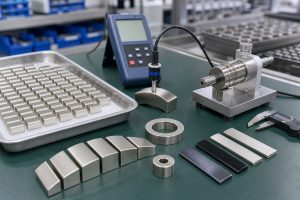
- Neodymium Magnets (NdFeB):Known for their strong magnetic field, neodymium magnets are ideal for high-power applications, such as electric vehicles and industrial servos.
- Samarium Cobalt Magnets (SmCo): These magnets perform well in high-temperature environments, making them ideal for aerospace and high-temperature industrial applications.
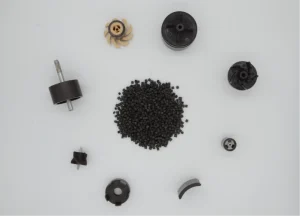
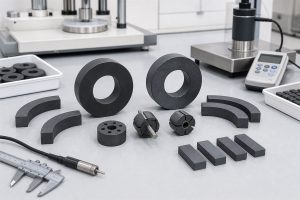
- Ferrite Magnets:More cost-effective, ferrite magnets are often used in low-power applications, such as household appliances (e.g., fans and washing machines).
Rotor Design
The design of the permanent magnet rotor plays a significant role in determining the motor’s performance. For instance, the installation method of the magnet (surface mount vs. embedded) can affect torque and efficiency.
Key Performance Parameters
When selecting a permanent magnet for your rotor, key properties to consider include:
- Residual flux density (Br): Affects the strength of the magnetic field.
- Coercivity (Hc):Indicates the magnet’s resistance to demagnetization.
- Maximum energy product (BHmax):Influences the maximum energy stored in the magnet, which directly affects torque and efficiency.

4. Why Permanent Magnet Brushless Motors Outperform Other Motor Types
Permanent magnet brushless motors have several advantages over other motor types:
- Higher efficiency:By eliminating the need for brushes, these motors waste less energy, making them more efficient.
- Longer lifespan:With fewer moving parts, they last much longer compared to brushed motors.
- Compact design: These motors are smaller and lighter, ideal for applications where space and weight are important.
- High torque and speed: Permanent magnets enable BLDC motors to deliver more torque and speed at lower power consumption levels.
- Reduced heat generation:Efficient operation means less heat is produced, which helps prevent overheating.
In applications like electric vehicles or robotics, these benefits make permanent magnet brushless motors the preferred choice.
Related article: Are Brushless DC Motors Better? A Clear and Practical Guide
5. How to Choose the Right Permanent Magnet for Your BLDC Motor?
Choosing the right permanent magnet for your BLDC motor is a key decision that impacts motor performance, efficiency, and cost. Here are the three primary factors to consider:
- Power and Temperature Requirements:High-temperature environments, such as those found in electric vehicles or aerospace applications, require magnets with high thermal stability, such as Samarium Cobalt (SmCo) magnets or high-temperature NdFeB magnets.
- Cost vs. Performance: For lower-power applications, such as household appliances, ferrite magnets are often a more cost-effective solution, while NdFeB magnets are ideal for high-power applications due to their superior performance and energy density.
- Demagnetization Resistance: Choosing magnets with high coercivity ensures the motor maintains optimal performance, even under heavy load conditions or external magnetic influences.
Additionally, it’s important not to focus solely on the strength of the magnet, as matching the permanent magnet rotor with the motor’s stator design is just as crucial to achieving the best performance.
Related article: How to Choose the Right Magnet for Your DC Brushless Fan
6. Conclusion
Permanent magnets are an essential component of brushless DC motors, offering superior efficiency, durability, and performance. By replacing traditional winding systems with a permanent magnet rotor, BLDC motors are able to operate more efficiently, with fewer components that require maintenance.
As the demand for energy-efficient, low-maintenance motors continues to grow, understanding the role of permanent magnets in brushless DC motors will help you make better choices for your applications. Whether you’re working on electric vehicles, robotics, or industrial equipment, selecting the right permanent magnet is crucial for optimizing motor performance.
Why Neodymium Iron Boron Magnets Are the Best Choice for Your High-Performance Applications